
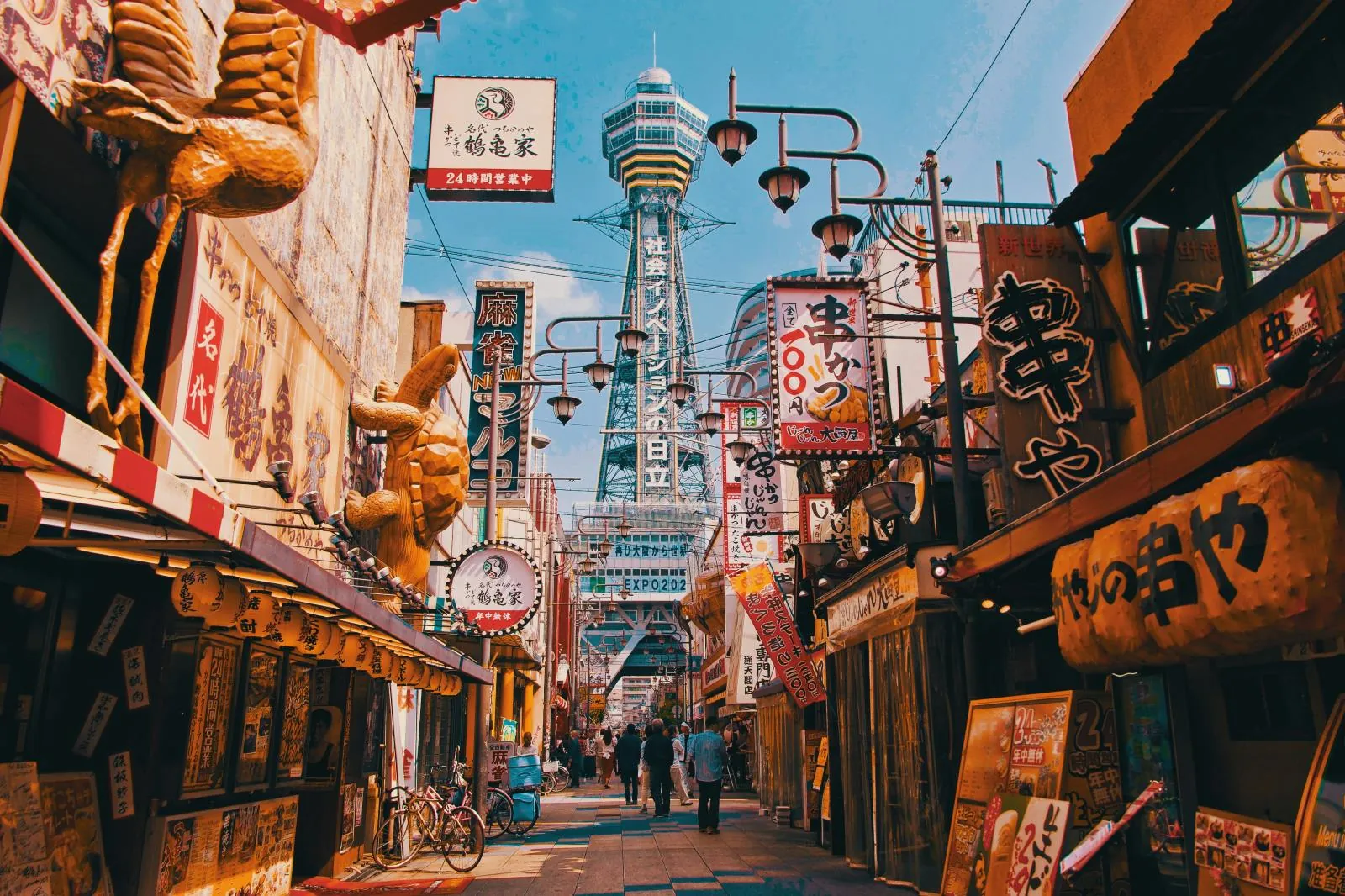
Illuminated Osaka street at night, Japan

How much does it cost to travel to Japan?

Real prices and a budget broken down per person and per day so you can plan without surprises.

Calculate your estimated budget

Total estimate per person
1,900 – 2,750 €
Flight ~775 € · 120–205 €/day · 10 days

Japan has a reputation for being expensive, but the reality is more nuanced: public transport, local food and temples are surprisingly affordable. The final price depends above all on your travel style and on when you book your flights.

How much it costs to fly to Japan by month

Indicative return flight price to Tokyo from your city, month by month. It helps you see when it is cheapest (months with no data require a search).

The reality of the cost of travelling to Japan

Japan has carried a reputation as an expensive destination for years. In part it is deserved: long-haul flights are not cheap, and a ryokan with dinner can cost you what three nights in a European hotel would. But day to day, Japan is surprising. A bowl of ramen at a local restaurant costs between 6 and 10 €. A metro ticket between zones, 1 or 2 €. Many of the best moments of the trip — strolling through Gion at dusk, watching the Shibuya crossing, sitting in a park during the sakura — are completely free.

The key is understanding where the real spending is concentrated. Most of the budget for a trip to Japan goes on three things: the flight, accommodation and, if you travel between cities, long-distance transport. Everything else — food, tickets, shopping — is surprisingly flexible.

The flight: the most variable item

Direct flights to Tokyo are scarce from most origins — the usual thing is to make a layover in cities such as Doha, Dubai, Helsinki or Amsterdam. The price varies a lot by season: in low season (January-February, June) you can find flights for 500–700 €. In spring (sakura season) or during Japan\'s Golden Week, the same flights can cost double. Booking 4–6 months ahead and being flexible by ±3 days on the dates can save you 200–400 €.

Accommodation: more options than you think

Japan has one of the most varied accommodation systems in the world. At the budget end are hostels (guesthouses) and capsule hotels, where you can sleep well for 25–45 € in cities such as Tokyo or Osaka. In the mid range, Japanese business hotels (chains such as Toyoko Inn or Dormy Inn) offer clean, well-equipped, well-located rooms for 60–100 €. At the top end is the ryokan — traditional accommodation with tatami, a wooden bath and a kaiseki dinner included — which can run from 150 € to more than 300 € per person.

One important detail: prices in Tokyo are 20 to 30% higher than in the rest of the country. If your budget is tight, staying some nights in secondary cities such as Kyoto or Hiroshima (instead of Tokyo) cuts the bill noticeably.

Where does the money go?

Indicative average prices per person, at a rate of 1 € ≈ 184 ¥. The euro figures may vary with the exchange rate.

Flights
500 – 1,200 €
Return with a layover. From 500 € in low season, up to 1,200 € during sakura/autumn. Booking 4–6 months ahead reduces the price.
Accommodation
25 – 250 € / night
Hostel 25–45 €. Mid-range hotel 60–120 €. Ryokan 120–250 € with dinner included. Tokyo +20–30%.
Transport
10 – 50 € / day
JR Pass 7 days 50,000 ¥ (~270 €). Daily metro 5–10 €. Suica/Pasmo for all kinds of transport.
Food
15 – 80 € / day
Konbini 3–5 €. Ramen 6–10 €. Mid-range restaurant 15–25 €. Kaiseki 50–100+ €.
Activities
5 – 30 € / day
Temples free or 3–5 €. Museums 5–12 €. Onsen 10–25 €. USJ from 9,200 ¥ (~50 €).
Extras
5 – 15 € / day
eSIM 15–30 € (2 weeks). Insurance 30–60 €. Souvenirs at 100-yen shops.

Daily budget by travel style

Per person and day, not counting flights.

Backpacker

56 – 92 € / day
hostels, konbini, metro
Accommodation 25–40 €
Food 15–25 €
Transport 8–12 €
Activities 5–10 €
Extras 3–5 €

Mid-range traveller

120 – 205 € / day
3* hotel, restaurants, JR Pass
Accommodation 60–100 €
Food 30–50 €
Transport 15–25 €
Activities 10–20 €
Extras 5–10 €

Comfortable trip

265 – 520 € / day
4-5* hotel, ryokan, kaiseki
Accommodation 150–300 €
Food 60–100 €
Transport 25–50 €
Activities 20–50 €
Extras 10–20 €

Total budget by trip length

Per person, flights included (~700 € with a layover).

7
days
1,100 – 1,350 €Backpacker1,550 – 2,150 €Mid-range2,550 – 4,350 €Comfortable
10
days
1,260 – 1,620 €Backpacker1,900 – 2,750 €Mid-range3,350 – 5,900 €Comfortable
14
days
1,490 – 1,990 €Backpacker2,380 – 3,570 €Mid-range4,410 – 7,980 €Comfortable
21
days
1,880 – 2,630 €Backpacker3,220 – 5,000 €Mid-range6,265 – 11,620 €Comfortable

How to handle money in Japan

Japan is still a predominantly cash country, although the situation has improved a lot in recent years. Hotels, large store chains and konbini accept cards without a problem. But many small restaurants, temples, street markets and some local transport only accept cash. Going to Japan with cards alone is risky.

Where to withdraw cash?

The ATMs at 7-Eleven and at Japan Post (the Japanese post office) accept international cards on Visa, Mastercard and other global networks. They are the most reliable and you will find them in almost any neighbourhood. Avoid local bank ATMs, which often reject foreign cards. The limit per transaction is usually 50,000–100,000 ¥ (270–550 €), enough for several days.

The yen and the exchange rate

The indicative exchange rate is 1 € ≈ 184 ¥ (as of 2026), but it can vary. For quick calculations on the trip, divide by 150 and you will get a conservative estimate in euros. So 1,500 ¥ is about 10 €, and 10,000 ¥ around 65 €. For the exact conversion before you leave, use this site\'s yen to euro converter.

Transport card: Suica or Pasmo

One of the best investments you can make on arrival is to load a rechargeable transport card (Suica or Pasmo). It can be used on the Tokyo metro, local trains, buses, and also to pay at konbini and some shops. It removes the need to buy individual tickets and greatly speeds up getting around. You can get it directly on an iPhone with Apple Pay or at the machines in the main stations.

How much it costs to get in from the airport

The cost of getting from the airport to the centre is one of the first surprises of a trip to Japan. There are important differences between the options:

Tokyo: Narita vs Haneda

Narita is 60–80 km from central Tokyo. The main options are:

  • Narita Express (N'EX): about 3,070 ¥ (~17 €) to Tokyo Station and 3,250 ¥ (~18 €) to Shinjuku or Shibuya. It takes 60–90 minutes. The most convenient option with luggage. There is a discounted round-trip tourist ticket (around 4,070 ¥) for foreign passports.
  • Keisei Skyliner: about 2,580 ¥ (~14 €) to Ueno or Nippori (a little less buying it online in advance). 36–41 minutes. Faster than the N'EX if you are staying in northern Tokyo.
  • Shuttle bus (limousine bus): around 3,200 ¥ (~17 €) to the major hotels. Slower because of traffic, but it takes you straight to the door.
  • Taxi: 20,000–25,000 ¥ (110–140 €). Only makes sense in a group of 4 with a lot of luggage.

Haneda is much closer (30–40 minutes to the centre). The monorail to Hamamatsucho costs about 500 ¥ (~3 €) and the Keikyu Express to Shinagawa, around 300–400 ¥ (~2 €). The fares of the Tokyo-area trains were revised upwards in March 2026, so confirm the exact price before travelling.

Osaka: Kansai Airport

  • Haruka Express: covered by the JR Pass. Without a pass, foreigners have a discounted one-way tourist ticket (around 1,300 ¥ to Tennoji or 1,800 ¥ to Shin-Osaka/Osaka). 50–75 minutes.
  • Rapi:t (Nankai): about 1,520 ¥ (~8 €) as an e-ticket (1,670 ¥ on paper) to Namba. 35–40 minutes. Not covered by the JR Pass.
  • Nankai Airport Express: the cheapest option, around 970 ¥ (~5 €) to Namba in about 44 minutes.

Costs many travellers do not anticipate

Beyond the big items, there are small recurring costs that, added up over the trip, distort the budget if you do not account for them. The good news is that some play in your favour.

What adds up without you noticing

  • Coin lockers: storing luggage at a station costs about 400–700 ¥ per use. If you do day trips (Nara, Kamakura, Hakone), they add up.
  • Luggage forwarding (takuhaibin): sending a suitcase from one hotel to another costs about 1,500–2,500 ¥ per item. It is very convenient to avoid dragging it on the Shinkansen, but it is an extra cost to budget for.
  • IC card deposit: a physical Suica or Pasmo requires a 500 ¥ deposit (refundable when you return it). The digital version on your phone does not have it.
  • Small temple entries: individually they cost 300–600 ¥, but on an intensive route through Kyoto you can visit several a day.
  • Onsen and extras: towel rental (100–300 ¥) or a locker at some public baths. Paid onsen are around 500–1,000 ¥.

What plays in your favour

  • No tipping: in Japan you do not tip at restaurants, taxis or hotels. Unlike other destinations, that extra 10–20% simply does not exist — the price you see is what you pay.
  • Tax-free shopping: in many shops, foreign tourists can buy without the 10% consumption tax by showing a passport, usually from 5,000 ¥ of purchase. Look for the "Tax-Free" sign and confirm the conditions at the till.
  • Free water and toilets: the tap water is drinkable and public toilets (stations, konbini, shopping centres) are free and clean. Zero spend on these basics.
Calculate your personalised budget Enter budget, dates, travellers, pace and interests. The planner generates an itinerary with estimated costs per person and day, plus links to hotels and activities.
Use the free planner

More travel guides

Frequently asked questions

Is Japan really expensive?

Less than it seems. Street food, konbini and public transport are very affordable. The bigger spend is on the flight and accommodation, which depend a lot on the season. A 10-day trip with flights and a mid-range style is around 1,900–2,750 € per person. See also how to save money in Japan to reduce the budget.

How much money do I need to travel to Japan?

For a 10-day trip in a mid-range style (3* hotel, local restaurants, train transport) budget between 1,900 and 2,750 € per person including flights. In backpacker mode you can do it for 1,260–1,620 €. For a comfortable trip (4* hotel, ryokan, kaiseki), the budget rises to 3,350–5,900 €. Use the itinerary planner for a personalised calculation.

What budget do I need for 14 days in Japan?

14 days (two weeks) is the reference length for a first route through Tokyo, Kyoto, Osaka and Hiroshima at a relaxed pace. Per person and with flights included, as you can see in the budget-by-length table: 1,490–1,990 € in backpacker mode, 2,380–3,570 € at mid-range and 4,410–7,980 € on a comfortable trip. Adjust it to your cities and dates with the free planner.

How much cash should I bring to Japan?

Bring between 10,000 and 30,000 ¥ (55–165 €) on arrival for the first few days. After that, withdraw from 7-Eleven or Japan Post ATMs, which accept international cards without a problem. The limit per transaction is usually 50,000–100,000 ¥. Do not rely on cards alone: many small restaurants and temples only accept cash. Use the yen converter to work out how much to bring.

How much does the JR Pass cost?

The JR Pass for foreign travellers (ordinary class) costs 50,000 ¥ (~270 €) for 7 days, 80,000 ¥ (~435 €) for 14 days and 100,000 ¥ (~545 €) for 21 days per person. It includes almost all Shinkansen except the Nozomi and the Mizuho. Note that from 1 October 2026 the price rises at sales agents (not on the official website). If you do the TokyoKyotoOsaka–Hiroshima route, the 7-day one usually pays off. More detail in the JR Pass guide, and check your case in the JR Pass calculator.

How much does a ryokan cost?

A ryokan (traditional Japanese inn) costs between 100 and 500 € per person per night, with dinner and breakfast included in most cases. The cheapest are simple but authentic; the high-end ones include a private onsen and an elaborate kaiseki menu. One or two nights in a ryokan during the trip is one of the most recommended experiences in Japan.

Card or cash in Japan?

Combine both. Hotels, trains and konbini accept cards without a problem. Small restaurants, temples, street markets and some local transport only accept cash. The Suica transport card covers the metro, local trains and many konbini with a single top-up.

How much does it cost to eat per day in Japan?

Tight (konbini, ramen, gyudon): 15–25 €. Mid-range (local restaurants, izakaya): 30–50 €. High (tempura, quality sushi, kaiseki): 60–100 €. A bowl of ramen costs between 900 and 1,500 ¥ (5–8 €). Eating well and cheaply in Japan is entirely possible.

Is the JR Pass worth it?

It depends on your route. Since it went up in price, the 7-day JR Pass (50,000 ¥, ~270 €) no longer pays off on as many itineraries as before. It usually works out if you chain several long Shinkansen journeys, for example TokyoKyotoOsaka → Hiroshima in a few days. If you stay in Tokyo or only do a short route, individual tickets are almost always cheaper. Calculate your specific case in the JR Pass calculator.

Can I shop tax-free in Japan?

Yes. Many shops offer "Tax-Free" purchases to foreign tourists: they deduct the 10% consumption tax when you show your passport, usually on purchases from 5,000 ¥. Look for the "Tax-Free" sign and confirm the conditions at the till, as they vary by shop. Note that in Japan you do not tip, so there is no extra spend on top of the price. More tips in how to save money in Japan.

Do I need a visa to enter Japan?

Most Western countries (the whole EU, Latin America, the US, Canada, Australia) have a visa-exemption arrangement for tourist stays of up to 90 days. You only need a valid passport with at least 6 months of validity and a return ticket. No prior visa or consular procedure is needed. See the complete guide to the Japan visa.