Tokyo at night with its lights and skyscrapers

When to travel to Japan?

Price, weather and tourism by season so you can choose the date that best suits you.

Which months are you travelling?

There is no perfect date to travel to Japan — there is one that is perfect for you. The sakura spring is spectacular but expensive. Winter is cheap and quiet. This guide helps you decide based on your budget, tolerance for heat and appetite for crowds.

Search for your flight to Japan

Compare flight prices to Japan from your city and book at the best price. The departure airport and the dates are indicative: change them to suit your trip.

The four seasons of Japan

Japan has four very distinct seasons, each with its own character, price and appeal. Unlike many destinations where "low season" simply means fewer tourists, in Japan each season offers a radically different experience. The country literally changes colour four times a year: white with snow in winter, pink with sakura in spring, deep green in summer and red and orange with koyo in autumn.

This variation makes the choice of dates especially important. It is not just about price: it is about what kind of trip you want to experience. The same temple in Kyoto can be deserted in February or completely overwhelmed in April during the peak of the sakura.

Month-by-month comparison: weather, price and tourism

Month Avg. temp. Weather Tourism Price Highlight
January Winter3–10 °CCold and sunnyVery lowLowestThe cheapest month. Deserted temples.
February Winter3–12 °CCold and sunnyVery lowLowestUme (plum) blossoms. No tourists.
March Spring7–17 °CMild, variableHighHighFirst sakura in the south of the country.
April Spring12–22 °CMild and sunnyVery highPeakPeak sakura in Tokyo and Kyoto.
May Spring15–26 °CPleasantMedium-highMedium-highPost-sakura. Golden Week to avoid.
June Summer18–28 °CRainy (tsuyu)LowLowThe cheapest month of the year.
July Summer23–33 °CHot and humidMediumMediumGion Matsuri and summer festivals.
August Summer24–34 °CVery hotMediumMediumFireworks. Obon (13–16 Aug).
September Autumn18–28 °CHeat easingLow-mediumLowTransition. Low post-summer prices.
October Autumn13–23 °CMild and dryMediumMediumThe best balance of the year.
November Autumn8–19 °CCool and sunnyHighHighKoyo (red leaves). Second high season.
December Winter5–14 °CCold and clearMedium-lowMediumChristmas illuminations. New Year.

Spring (March – May)

FlightsHigh
HotelsHigh
TourismA lot
WeatherSunny, ideal
Sakura from late March to mid-April. Book 4+ months ahead.

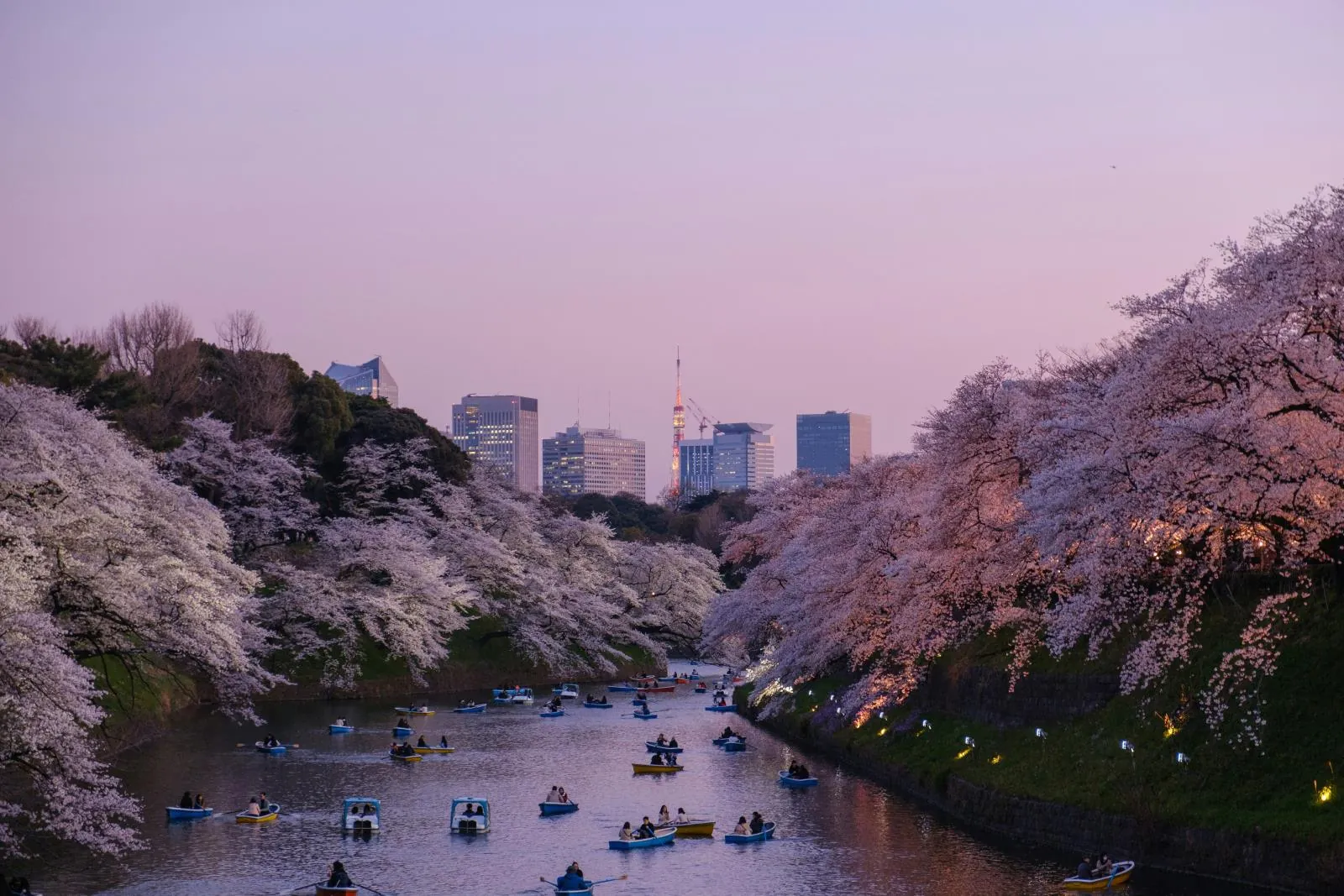
Spring is the most in-demand season and the most expensive. The weather is mild, the days are long and the country is at its visual best. The main reason people choose this period is the sakura, but there is more: the spring festivals, the gardens in bloom and a general atmosphere in the streets that few cities in the world can match.

The sakura: what you need to know

The cherry blossom has no fixed date. It depends on the temperatures of the previous winter and varies each year. The usual window in Tokyo and Kyoto is late March to mid-April, but it can come up to two weeks earlier or later. If you plan your trip around the sakura, there will always be a margin of uncertainty. For the dates city by city and the best places to see them, see the guide to cherry blossoms in Japan.

During the peak, flights and hotels rise by 20 to 40% over the rest of the year. Rooms in Kyoto for the first half of April can sell out 5–6 months ahead. Start booking in October or November of the previous year. The sakura does not happen only in Tokyo and Kyoto: cities such as Hirosaki (Aomori) or Yoshino (Nara) have spectacular blossoms with far less tourism.

Sakura dates by city

The following dates are historical averages. Each year varies by one to two weeks depending on winter temperatures:

CityAverage bloomAverage peak
Tokyo25 Mar – 1 Apr1–10 Apr
Kyoto28 Mar – 3 Apr3–12 Apr
Osaka27 Mar – 2 Apr2–11 Apr
Hiroshima25 Mar – 1 Apr1–8 Apr
Hakone1–8 Apr8–17 Apr
Sendai7–14 Apr14–22 Apr
Sapporo (Hokkaido)23 Apr – 1 May1–8 May

If you want to maximise your chances of catching the sakura, choose the second week of April as your anchor point. That is when the probability of blossoms in Tokyo and Kyoto simultaneously is highest. The apps Sakura Navi (by the Japan Meteorological Corporation) and Weathernews publish updated forecasts from January each year.

Golden Week: watch the dates

From 29 April to 6 May 2026, Japan strings together a series of national holidays (in 2026, the strongest block of consecutive days falls from 2 to 6 May). It is the period of greatest domestic travel of the year: the shinkansen are booked weeks ahead, hotels go up in price and popular destinations are saturated. If you are going to be in Japan during Golden Week, book everything at least 3 months ahead.

Who spring is for

For those who want the fullest experience of Japan and have budget flexibility. If the sakura is not your priority, May (after Golden Week) offers very pleasant weather with somewhat lower prices and fewer crowds than April.
Summer (June – August)

FlightsLow
HotelsLow
TourismMedium
WeatherHeat and humidity, rain in June
June is the cheapest month of the year. Hokkaido stays cool (20–25 °C). August rises because of Obon.

The Japanese summer is intense. July and August in Tokyo and Osaka can exceed 35 °C with a humidity that makes the heat feel much worse. It is not the best time for those who do not tolerate heat or who plan long days of walking. That said, summer has clear advantages if you know how to make the most of them.

June: the cheapest month of the year

June coincides with the rainy season (tsuyu), which keeps many tourists away and prices low. The rain is usually short and intermittent, not all day. If you travel on a tight budget and do not mind carrying an umbrella, June offers the best price-to-experience ratio of the year. Kyoto's temples covered in hydrangea in the rain have a very different beauty from that of the sakura.

July: heat and festivals

The rainy season ends and the most intense heat begins. But July is also the month of the great summer festivals (matsuri): the Gion Matsuri in Kyoto, one of the most famous in the country, runs all month with its peak on 17 July. Fireworks festivals (hanabi) are held along the coast and rivers. Visually, it is one of the most special times of the year.

Hokkaido as an alternative to the heat

If you travel in summer but cannot stand the heat, Hokkaido is the solution. Japan's northernmost island keeps temperatures of 20–25 °C in July and August while the rest of the country swelters. Sapporo, Furano (lavender fields) and the Daisetsuzan National Park are exceptional summer destinations, without the crowds that gather in Tokyo or Kyoto.

Obon (mid-August): plan well

From 13 to 16 August, many Japanese return to their home towns for the Buddhist festival of Obon. There are large population movements: the shinkansen and hotels in coastal and rural destinations fill up. By contrast, big cities such as Tokyo can be quieter than usual, as their residents leave.

Autumn (September – November)

FlightsMedium
HotelsMedium
TourismMedium
WeatherMild and dry
Koyo (red leaves) in November. October: the year's best balance of price, weather and crowds.

Autumn is, for many experienced travellers, the best season to visit Japan. The summer heat has gone, the air is dry and cool, and the country starts to turn warm colours as November advances. Prices are intermediate and tourism is manageable, especially in October.

October: the month of perfect balance

October has everything you could ask of a travel month: temperatures of 15–25 °C, sunny days, little rain and a level of tourist activity that has not yet reached the koyo peak. It is the most balanced month of the year. Flight and hotel prices are lower than in spring, but the weather is almost as pleasant. If you have date flexibility, October is the answer.

November: the koyo

The koyo (changing colour of the leaves) is the autumn equivalent of the sakura. The Japanese maples (momiji) turn an intense red that makes gardens and temples into extraordinary scenes. In Tokyo and Kyoto the peak usually falls in mid to late November, and in warmer areas and the south the colour holds until early December; in the mountains and the north (Nikko, Tohoku, Hokkaido) it arrives earlier, already in October. The classic spots are the gardens of Kyoto (Eikan-do, Tofuku-ji, Arashiyama), Rikugien Park in Tokyo and the Nikko valley. November is the second busiest month of the year after April — in Kyoto, even more so than April — and prices rise compared with October. For the dates region by region and the best places, see the guide to the momiji in Japan.

September: summer saying goodbye

September is still hot and humid in the first weeks. The heat eases gradually towards the end of the month. Tourism drops after Obon and prices are relatively low. It is a month for those seeking the transition between summer and autumn, with some cooler days and many destinations less crowded than in the peak seasons.

Winter (December – February)

FlightsLow
HotelsLow
TourismLow
WeatherCold and sunny
Lowest prices in January-February. Onsen in the snow, skiing in Hokkaido, illuminations in December.

The Japanese winter surprises those who expect it grey and cold. In the main cities the cold is dry and manageable, with temperatures that rarely drop below 0 °C in Tokyo or Osaka. The days are clear and sunny, tourism is minimal and prices are at their lowest of the year. It is the season for those who want Japan without crowds and on the tightest budget. To make the most of this price advantage, see the guide on how to save money in Japan.

January and February: the cheapest months

After the New Year period (which ends around 3 January), tourism drops sharply. January and February are the months where you will find the cheapest flights and hotels of the year. Kyoto's temples, which are packed in April, are almost deserted in February. The queues at museums and attractions disappear. If you have some resistance to the cold (standard winter clothing is enough), this season offers the best experience for the price you pay.

Onsen: the great winter experience

The Japanese hot-spring baths (onsen) can be enjoyed at any time, but in winter they reach their fullest expression. Soaking in 40 °C water with snow falling around you (yukimi onsen) is one of the country's most iconic experiences. The best snow-onsen destinations are in Tohoku (Nyuto Onsen, Zao Onsen) and Hokkaido (Noboribetsu). Many ryokan (traditional inns) include the onsen in the room price.

Skiing in Hokkaido

Hokkaido in January and February is one of the best ski destinations in the world. Niseko has an international reputation for its powder snow (japow), light and dry thanks to the Siberian climate. Other resorts such as Furano, Rusutsu or Kiroro are less well known but equally good and with fewer foreigners. You can combine a week of main cities (Tokyo, Osaka, Kyoto) with a few days of skiing in Hokkaido without complications thanks to the JR Pass.

December: illuminations and New Year

December has its own appeal: the Christmas illuminations transform parks and avenues in the big cities. The New Year period (31 Dec – 3 Jan) is special: the first temple visit (hatsumode) on 1 January draws millions of people, but restaurants close and the atmosphere is more ceremonial. Book ahead if you travel on these dates.

Typhoon season: what you should know

It is the climate factor most often overlooked when choosing dates and yet it can shape a trip. The typhoon season (taifu) in Japan runs roughly from August to October, peaking in September. It does not mean there will be a typhoon during your trip — many pass out to sea — but it is worth understanding the risk.

How it affects a trip

  • Flights: a typhoon on a direct track can cause cancellations of international and domestic flights for a day or two. Airlines usually allow free changes when there is an official warning.
  • Trains: JR and the private lines suspend service preventively if strong winds are forecast, including the Shinkansen on the affected sections. Service is restored quickly once the front passes.
  • Most exposed areas: Okinawa and Kyushu (south-west) get more typhoons than Tokyo, and the north (Tohoku, Hokkaido) is the least affected.

How to reduce the impact

  • Take out travel insurance that covers weather cancellations and delays.
  • Leave a margin between the last day of domestic travel and the return flight, to absorb a possible day of disruption.
  • Check the Japan Meteorological Agency (JMA) during the trip: typhoons are announced several days in advance.
  • If a typhoon is approaching, plan an indoor day (museums, department stores, food) instead of outdoor trips.

In practice, September and early October remain attractive months for their good prices; you just need to travel with some flexibility and the weather information to hand.

Periods worth avoiding

Japan has several periods of high domestic pressure when the Japanese themselves travel en masse. During these days, trains, hotels and attractions are at their limit. If you coincide with them without having planned for it, the trip can become stressful and expensive.

Golden Week (late April – early May)

From 29 April to 6 May 2026, Japan strings together a series of national holidays (Showa, Constitution, Greenery Day and Children's Day); in 2026 the strongest run of consecutive days is from 2 to 6 May. It is the period of greatest domestic travel of the year: the shinkansen are booked weeks ahead, hotels go up in price and popular tourist destinations are saturated. If you are going to be in Japan during Golden Week, book everything at least 3 months ahead and avoid the major destinations on the central days.

Obon (mid-August)

From 13 to 16 August, many Japanese return to their home towns for the Buddhist festival of Obon. There are large population movements, especially on trains and motorways. Hotels in rural destinations and beaches are booked far ahead. By contrast, big cities such as Tokyo can be a little quieter, as their residents leave.

New Year (31 December – 3 January)

Many shops, restaurants and attractions close between 31 December and 3 January (the most widespread closure is on the 1st to 3rd). 1 January is one of the busiest days of the year at temples (hatsumode). The shinkansen and domestic flights fill up. If you travel on these dates, you will see a different Japan but you will have to adjust your expectations.

When to go according to your profile?

  • If you want the sakura: book 4–5 months ahead for March or April. Accept paying more for flights and hotels.
  • If you are looking to save: January or February are the cheapest months of the year. Dry cold, very little tourism.
  • If you want balance: October is the perfect month — mild weather, koyo at the end, intermediate prices and fewer crowds than in spring.
  • If you cannot stand the heat: avoid July and August. Temperatures in Tokyo and Osaka exceed 35 °C with high humidity.
  • If you want to ski: Hokkaido in January or February. Low price, abundant snow, and you can combine it with Tokyo.
  • If you travel with family: October or November, when the weather is stable and children cope better with the walking.
You know when to go — now plan the route The planner automatically splits the nights across cities according to your dates, pace and interests.
Plan my trip

More travel guides

Frequently asked questions

What is the best time to travel to Japan?

October is the month with the best balance of weather, price and tourism. If budget is no problem, the March-April sakura is the most sought-after experience. If you want to save as much as possible, January or February are the cheapest months of the year. See also how much it costs to travel to Japan to estimate the budget by season.

When do the cherry blossoms bloom in Japan?

The sakura blooms between late March and mid-April in most of the country. In Tokyo and Kyoto the peak is usually the first week of April. In Sapporo (Hokkaido) it arrives later, in late April or early May. The exact dates vary each year by up to two weeks depending on winter temperatures.

When are there fewer tourists in Japan?

January and February are the months with the fewest tourists. After the Japanese New Year holidays (which end on 3 January), tourism drops sharply. The temples of Kyoto that are packed in April are practically deserted in February.

Is it good to travel to Japan in summer?

It depends on your tolerance for heat. July and August in Tokyo and Osaka exceed 33–35 °C with very high humidity, which makes sightseeing exhausting. However, summer has advantages: lower prices than in spring, the great summer festivals (matsuri) and the fireworks. If you opt for summer, Hokkaido is a cool alternative (20–25 °C). See also the guide to festivals in Japan so you do not miss the season's matsuri.

When is the rainy season in Japan?

The rainy season (tsuyu) in Japan is in June, with variations by region: it reaches Kyushu in late May and ends in Hokkaido in mid-July. The rain is usually short and intermittent, not all day. June is the cheapest month of the year precisely because of the tsuyu.

When is the typhoon season in Japan?

The typhoon season runs roughly from August to October, peaking in September. Most pass out to sea, but a typhoon on a direct track can cancel flights and suspend trains (including the Shinkansen) for a day or two. Okinawa and Kyushu are the most exposed areas; Tohoku and Hokkaido the least. If you travel on these dates, take out travel insurance, leave a margin before your return flight and check the Japan Meteorological Agency during the trip.

Is it worth going in winter?

Yes, if you are after low prices and calm. January and February are the cheapest months. The cold in Tokyo and Osaka is dry and bearable (rarely below 0 °C), and there are exclusive winter experiences: onsen in the snow in Tohoku and Hokkaido, skiing in Niseko and the special atmosphere of the snow-covered temples of Kyoto.

What is the weather like in Japan in October?

October is one of the best months to travel to Japan. Temperatures in Tokyo and Kyoto range between 13 and 23 °C, the days are sunny and dry, and rain is scarce. The summer heat has gone and the koyo (changing colour of the leaves) begins at the end of the month. It is the month with the best weather for walking all day.

When is it cheapest to fly to Japan?

January and February (excluding the Japanese New Year period, until 3 January) are the cheapest times to fly. June also offers good prices although it coincides with the rainy season. The most expensive flights to Japan of the year are the sakura peak (first week of April) and Golden Week (late April – early May).

How does the sakura affect prices?

Flights and hotels rise by 20 to 40% during the sakura (late March to mid-April). In Kyoto, hotels for the first half of April can sell out 5–6 months ahead. Book in October or November of the previous year if you plan to travel during the sakura.

When is Golden Week and why does it matter?

Golden Week is the period of consecutive national holidays in late April and early May: in 2026 it runs from 29 April to 6 May, with the strongest run of consecutive days from 2 to 6 May. It is the time of greatest domestic travel of the year in Japan: the shinkansen are booked weeks ahead, hotels go up in price and tourist destinations are saturated. If you coincide with Golden Week, book everything at least 3 months ahead and avoid the major destinations on the central days. Use the trip planner to organise your dates well.