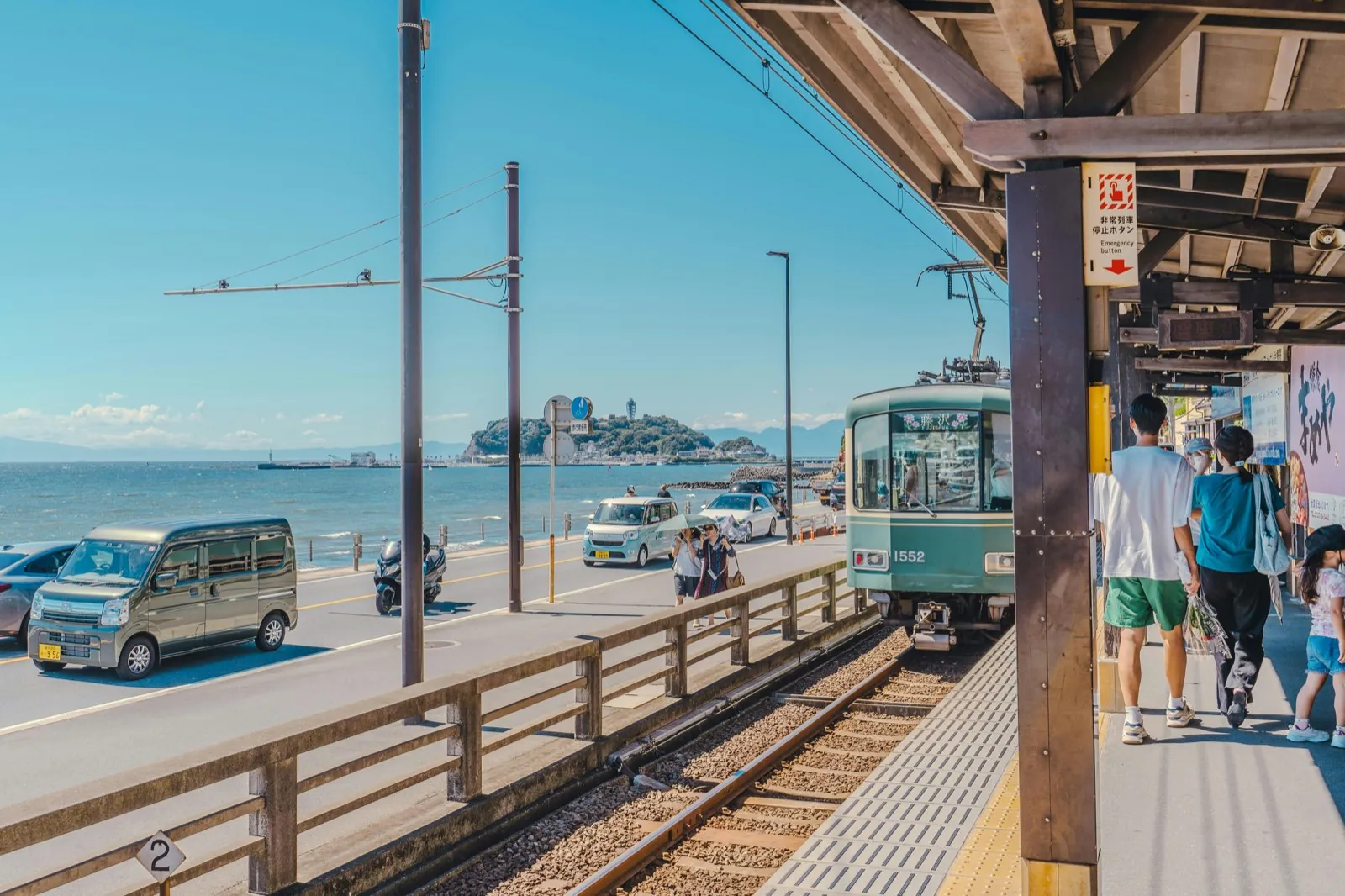
Landscape of Kamakura, a coastal city south of Tokyo

Day trip to Kamakura from Tokyo

An hour away by train, Kamakura offers the Great Buddha, temples among forests and a quiet coast. A guide to organising it in a day.

Kamakura was the military capital of Japan in the 12th century. Today it is a coastal city of 170,000 inhabitants an hour by train from Tokyo, with more than 80 temples and shrines, the most famous open-air Great Buddha in the country and a quiet beach that rounds off the day perfectly.

How to get to Kamakura from Tokyo

The most direct route is the JR Yokosuka Line train from Tokyo Station or Shinjuku to Kamakura station. The journey takes:

  • From Tokyo Station: ~56 minutes
  • From Shinjuku: ~65 minutes (with a transfer at Ofuna or direct)
  • From Shibuya or Osaki: ~55–60 minutes

A one-way ticket costs about 940 ¥ (around 5 €). If you have a JR Pass, it is covered. If not, the Suica or Pasmo also work: just tap the card on entry and exit, and the amount is deducted automatically.

The train runs frequently (several per hour) and no reservation is needed. Confirm the exact time from your departure station on a transport app on the day. If you are still working out how to get around the capital, the guide on how to get around Tokyo will help.

What to see in Kamakura: the essentials

A full day is enough to see the essentials without rushing. The logical order goes from north to south following the layout of the city:

The Great Buddha of Kamakura (Kotoku-in)

The most iconic image: a bronze Buddha about 11.3 metres tall (around 13.35 metres counting the pedestal) cast in the mid-13th century, in the open air since the building that covered it was destroyed by a tsunami in the 15th century. Entry to the Kotoku-in temple precinct costs 300 ¥ (around 1.6 €) and, for an additional 50 ¥, you can go inside the hollow statue. Arrive before 10:00 to avoid the groups.

Hase-dera temple

About 10 minutes on foot from the Great Buddha: a temple with terraced gardens on a hill, a golden 9.18-metre Kannon statue (the tallest wooden carving in Japan, with eleven heads), and views of Sagami Bay. Entry to the precinct costs 400 ¥ (around 2.2 €); the small Kannon museum is paid separately. It is one of the most photogenic spots in the area, especially in June with the hydrangeas.

Tsurugaoka Hachimangu shrine

The central shrine of Kamakura, at the end of the Wakamiya-oji avenue that crosses the city from south to north. Free entry. At weekends there are demonstrations of kyudo (archery) and yabusame (horseback archery) in the grounds.

The Komachi-dori district

The main street between the station and the shrine: local craft shops, matcha ice creams, freshly toasted sembei and local-cuisine restaurants. Perfect for eating and buying souvenirs on the way.

Adding Enoshima to the day (optional)

Enoshima is an island connected to the mainland by a pedestrian bridge, about 20 minutes by train from Kamakura on the Enoden line (the coastal tram, a ticket of about 260 ¥ each way). It has beaches, the Iwaya caves (entry around 500 ¥), gardens with views of Mount Fuji on clear days and a more relaxed atmosphere than Kamakura. If you are going to make several stops on the Enoden, the one-day "Noriorikun" pass (around 800 ¥) can pay off.

If you combine Kamakura in the morning with Enoshima in the afternoon, the day is fairly full. It is feasible if you leave Tokyo early (before 9:00) and have a medium-high travel pace.

If you prefer to go at a relaxed pace, save Enoshima for another visit or drop one of the Kamakura temples to give yourself margin.

Suggested itinerary for a day

TimeActivityNotes
08:30Departure from TokyoTokyo Station or Shinjuku (JR Yokosuka Line)
09:30Arrival in KamakuraQuick breakfast in the station area
10:00Great Buddha (Kotoku-in)Arrive early to avoid groups. Entry 300 ¥
11:00Hase-dera temple10 min on foot from the Great Buddha. Gardens + bay views. Entry 400 ¥
12:30Lunch on Komachi-doriRamen or local teishoku, 8–12 €
14:00Tsurugaoka HachimanguMain shrine. Free entry
15:30Enoshima (optional)Enoden train 20 min. Cave + Fuji views
17:30–18:00Return to TokyoDirectly from Kamakura or Enoshima

Kamakura beyond the essentials

If you are visiting again or want to get away from the crowds that gather around the Great Buddha, Kamakura holds quieter corners that many travellers skip.

Hokoku-ji, the bamboo temple

About 15 minutes by bus from the station, Hokoku-ji is a small zen temple with a dense, silent bamboo grove. For about 300 ¥ you access the bamboo grove, and for an additional 600 ¥ you have a matcha at the tea house with views of the grove. It is the calm, queue-free version of the famous Arashiyama in Kyoto.

Kita-Kamakura: the great zen temples

One station before Kamakura is Kita-Kamakura, the starting point of two of the most important zen temples in Japan: Engaku-ji and Kencho-ji, both from the 13th century and heads of the Rinzai school. Entry ~500 ¥ each. They have spacious gardens, meditation halls and far less tourism than the Great Buddha area.

The Daibutsu trail

A hiking path of about 3 km connects Kita-Kamakura with the Great Buddha through wooded hills. It takes about an hour and a half on foot and lets you chain zen temples, nature and the Buddha in a single walk. Wear comfortable footwear: there are stretches of dirt and roots.

How much the trip to Kamakura costs

  • Return train (Tokyo ↔ Kamakura)~10 € (included in the JR Pass)
  • Great Buddha entry (Kotoku-in)~1.6 €
  • Hase-dera entry~2.2 €
  • Inside the Great Buddha (optional, 50 ¥)~0.3 €
  • Lunch (ramen / teishoku)8–12 €
  • Enoden train + Iwaya caves (optional)~6–8 €
  • Snacks and souvenirs on Komachi-dori5–10 €
  • Total without JR Pass28–42 €
  • Total with JR Pass18–32 €

Kamakura is one of the cheapest day trips from Tokyo. The main monuments are inexpensive and there is much to see for free (Hachimangu shrine, Komachi-dori, outer gardens). The entries are in yen; for a quick idea in euros use the yen converter.

Include Kamakura in your itinerary through Japan The planner splits the days between Tokyo and other cities so you do not run out of time.
Plan my trip

More travel guides

Frequently asked questions

Can you do Kamakura in a day from Tokyo?

Perfectly. Leaving before 9:00 you have time to see the Great Buddha, Hase-dera, the Hachimangu shrine and stroll along Komachi-dori, getting back to Tokyo before 19:00. If you also want to see Enoshima, leave before 8:30.

Is it worth adding Enoshima to the visit?

Yes, if you leave early and keep a good pace. Enoshima adds 2 or 3 hours: it has the Iwaya caves (around 500 ¥, about 2.7 €), gardens with views of Mount Fuji and a relaxed atmosphere different from Kamakura. The Enoden train (about 20 minutes, around 260 ¥ each way) connects the two.

Does the JR Pass cover the train to Kamakura?

Yes. The JR Yokosuka line covers the Tokyo-Kamakura journey and is included in the JR Pass. The Enoden tram (Kamakura-Enoshima) is a private line and is not covered, but the ticket costs only about 260 ¥ (around 1.4 €).

What is the best time to visit Kamakura?

Spring (sakura in late March–April) and autumn (momiji in November) are the most beautiful, but also the busiest. On weekdays and outside high season, Kamakura is quiet and very enjoyable. Summer (July-August) is hot and the beaches fill up. See when to travel to Japan to choose the best time.

How much does the train ticket to Kamakura from Tokyo cost?

A one-way ticket is ~940 ¥ (~5 €) from Tokyo Station. The return is ~10 €. If you have a JR Pass it is included. If you use Suica it is deducted automatically when you exit the gate.

Which is better, Kamakura or Nikko as a day trip from Tokyo?

It depends on your interest. Kamakura is more compact, cheaper and combines well with Enoshima and the coast. Nikko has more elaborate shrines (lacquered and gilded), mountain nature and is somewhat more expensive and further away (2h by train). For a first visit, Kamakura is usually the easier choice. See how many days to spend in Tokyo to fit in the trip.

Do you have to book tickets for the Great Buddha of Kamakura?

There is no need to book in advance. The Great Buddha is a paid precinct but with no prior reservation: you simply buy the ticket at the counter (300 ¥) on arrival. In high season there may be a small queue, but it is quick.

Where to see bamboo or quiet temples in Kamakura?

Hokoku-ji temple has a silent bamboo grove (entry ~300 ¥, +600 ¥ for a matcha with views) and is usually far less crowded than the Great Buddha. In Kita-Kamakura, one station before, are the great zen temples Engaku-ji and Kencho-ji (~500 ¥ each). A 3 km hiking trail connects Kita-Kamakura with the Great Buddha in an hour and a half on foot.

Can you swim at the beaches of Kamakura?

Yes. The Yuigahama and Zaimokuza beaches are 15 minutes on foot from the station and open during the bathing season (July–August). Outside that time you can walk but swimming is not supervised.