
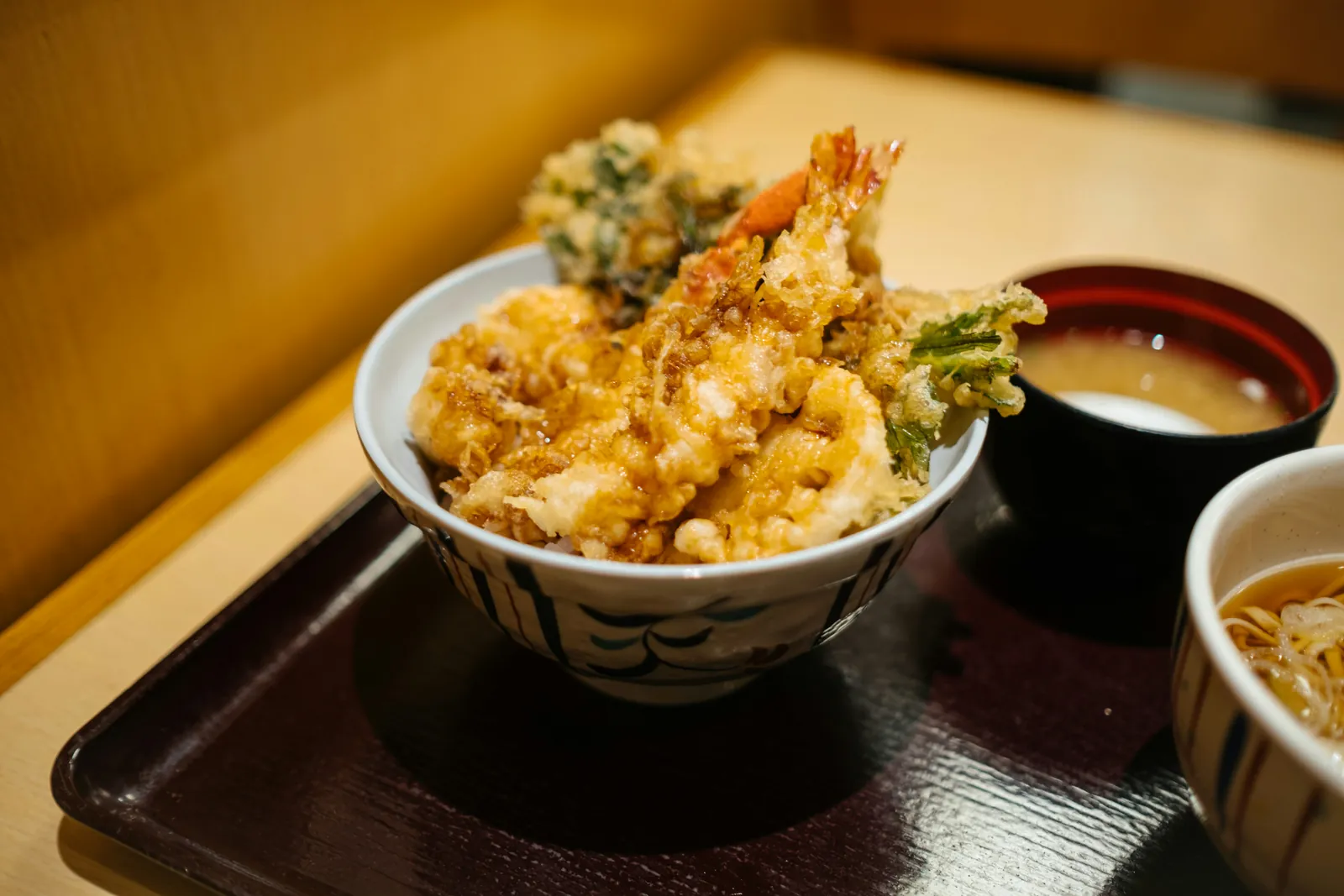
Japanese cuisine is much more than sushi
If you only associate Japan with sushi, a huge surprise awaits you. Traditional Japanese cuisine (washoku, inscribed by UNESCO as Intangible Cultural Heritage in 2013) is one of the most varied and refined in the world, and much of what is eaten daily has little to do with raw fish: there are steaming noodle soups, crispy fried foods, charcoal-grilled skewers, stews, savoury pancakes and a delicate confectionery of its own.
At the heart of washoku is the ichiju-sansai structure ("one soup, three dishes"): a bowl of rice, a miso soup and several side dishes that change with the season. It is the pattern of home cooking and of the set menus you will find all over the country.
Eating out is also cheap and easy compared with Europe: a bowl of ramen or a bowl of rice with something on top costs very affordable prices, and the average quality — even at a chain or a 24-hour store — is extremely high. This guide sorts out what to try, where to do it and how to manage without knowing Japanese.