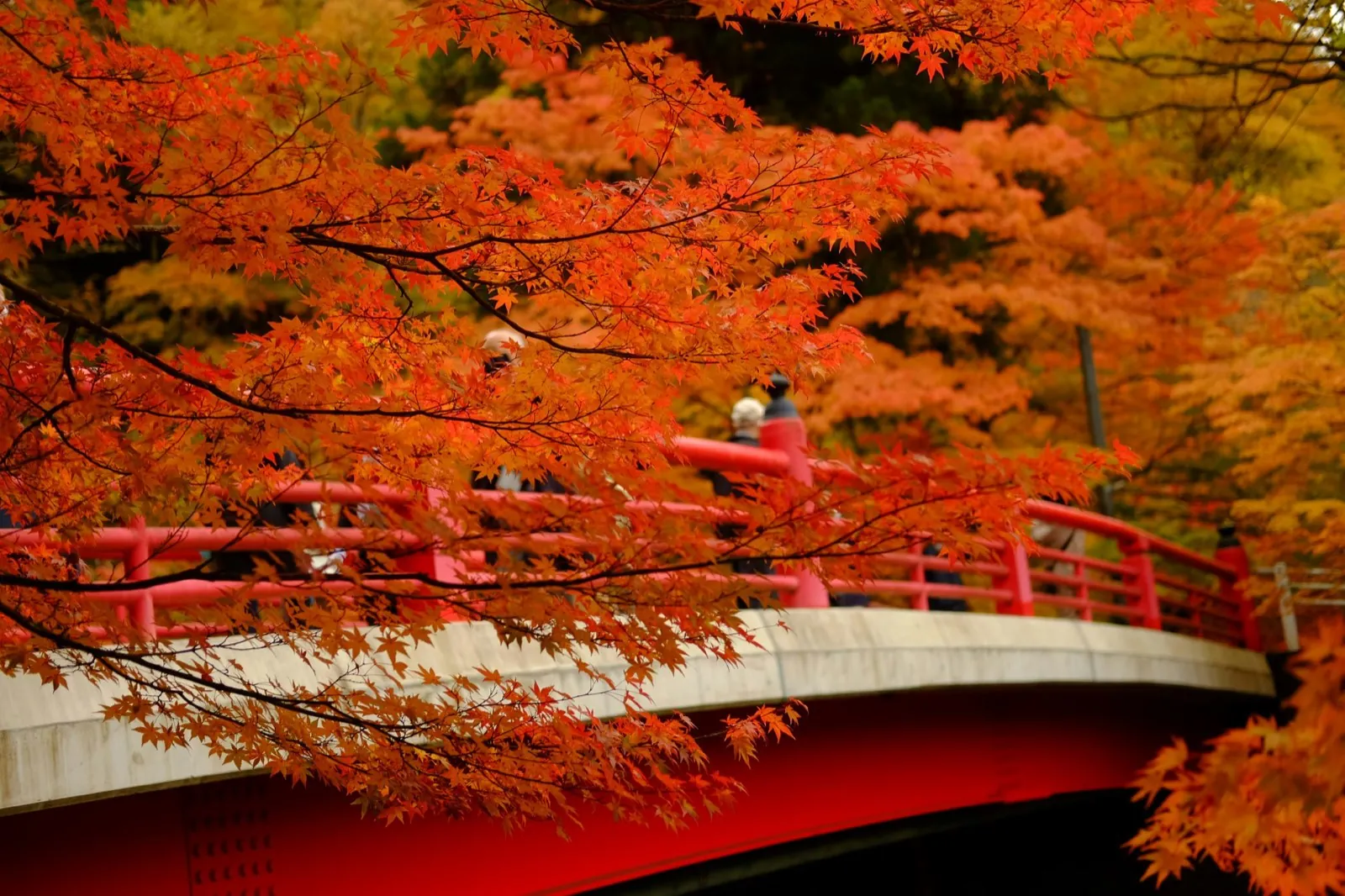
The momiji (the Japanese maple and, by extension, the spectacle of the autumn leaves) is Japan's second great seasonal event after the sakura. Between October and December, gardens, temples and mountains turn red, orange and gold. As in spring, the colour does not reach the whole country at once: this guide tells you when the leaves change region by region, where to see them and how to plan the trip to coincide with the peak.
What momiji and koyo are
It is worth distinguishing two words used a lot in autumn. The momiji is the Japanese maple, the tree with small palmate leaves that turns an intense red; by extension, it is used to refer to the autumn leaves themselves. The koyo is the phenomenon: the change of colour of the foliage as a whole, which also includes the yellows of the ginkgos and the coppery tones of other species.
Going to admire the leaves even has its own name, momijigari ("maple hunting"), the autumn equivalent of the spring hanami. For many Japanese it is one of the most beautiful moments of the year, and the most famous temples and gardens fill up at the peak, just as happens with the cherry trees.
When the leaves change: the koyo front
The koyo works the opposite way to the sakura. While the cherry trees bloom with the arrival of warmth (from south to north), the leaves change with the arrival of cold: the colour starts in the north and the high mountains and gradually descends towards the south and the lowlands. That is why the season stretches over more than two months if you combine altitudes and latitudes.
In Hokkaido and the mountains, the first leaves change as early as late September. In the big cities (Tokyo, Kyoto, Osaka) the peak comes much later, around mid to late November, when the rest of the country has already begun to go bare.
Approximate windows by area
These dates are indicative: the koyo depends on each autumn's temperatures and can come early or late. Take them as a guide to plan your route, not as a guarantee:
| Area | Approximate peak |
|---|
| Hokkaido and high mountains | late September – mid October |
| Tohoku and mountain areas (Nikko) | mid October – early November |
| Tokyo, Kyoto, Osaka, Nara | mid – late November |
| South and warmer areas | late November – early December |
Rule of thumb: if your main route is Tokyo and Kyoto, aim for the second half of November. If you travel in October, head up to the mountains or to the north (Nikko, Tohoku, Hokkaido) to coincide with the colour.
Where to see the momiji: best places
The koyo is enjoyed especially in temple gardens, where the maples are reflected in ponds and frame the traditional architecture. These are some of the most celebrated places:
- Kyoto: it is the undisputed momiji capital. The classics are Eikan-do and Tofuku-ji (with its famous bridge over a sea of maples), Arashiyama and Kiyomizu-dera. Many temples open at night with the leaves illuminated.
- Tokyo: the Rikugien garden (with night illumination), the avenue of golden ginkgos at Meiji Jingu Gaien and Mount Takao, an easy day trip from the city to see the colour in nature.
- Nikko: one of Japan's best autumn destinations, with the curves of Irohazaka, Lake Chuzenji and the Kegon Falls. The colour arrives here before Tokyo, in October.
- Mount Fuji (Five Lakes): the Kawaguchiko area offers the contrast of red maples with Fuji in the background, plus the famous "momiji tunnel".
- Tohoku (north): the Oirase gorge and the Naruko ravine are among the first to turn, as early as October, and with far less international tourism than Kyoto.
As with the sakura, the mountain and northern destinations draw far fewer crowds than the Tokyo–Kyoto axis, and they let you bring the season forward to October.
Momijigari: how autumn is experienced
Unlike the hanami, which is usually a picnic under the trees, momijigari is more of a contemplative stroll: you walk through gardens, temples and mountain trails to admire the colour. At the most famous spots in Kyoto, the queues to get in can be long at the peak, so it is worth arriving early.
The great added attraction of autumn is the night illuminations (light-up): many temples and gardens open at dusk and illuminate the maples, which are reflected in the ponds creating one of the most spectacular images of the year. Eikan-do and Kiyomizu-dera in Kyoto, or the Rikugien garden in Tokyo, are classics for seeing them.
Practical tips
- Arrive early at the most popular temples: by mid-morning there are already queues in high season.
- Book the night illuminations in advance when they require a timed ticket.
- Bring a warm layer: in November the evenings get cool, especially in the mountains.
- Combine city and mountain to make sure of the colour: if it has not arrived in the city yet, it will already be there at altitude.
How much it costs to travel in koyo season and when to book
The koyo is the second high season of the year in Japan, just behind the sakura. November is one of the busiest months (in Kyoto, even more than April) and prices for flights and accommodation rise compared with October, especially in the cities with the best momiji.
If your trip revolves around autumn, book accommodation several months in advance, especially in Kyoto and in mountain destinations such as Nikko or the Fuji area, where availability is more limited. October, on the other hand, remains a month of very good balance: good weather, koyo already started at altitude and lower prices than in November.
How not to miss the koyo peak
- Aim for the second half of November if your main route is Tokyo and Kyoto: that is when the colour reaches its best in the cities.
- Use altitude and latitude to your advantage: if you arrive early and it is still green in the city, head up to the mountains or to the north (Nikko, Tohoku, Hokkaido), where the koyo is ahead. If you arrive late, go south, where the colour holds until December.
- Check the autumn forecast: each year koyo estimates are published (for example on Weathernews) showing the advance of the colour by area.
- Have a plan B: even if you do not catch the exact peak, half-changed maples or the carpet of fallen leaves are still beautiful.
With your dates decided, plan a route that follows the advance of the colour: combine city and mountain and, if you are torn between seasons, compare autumn with the rest of the year in the guide to when to travel to Japan.