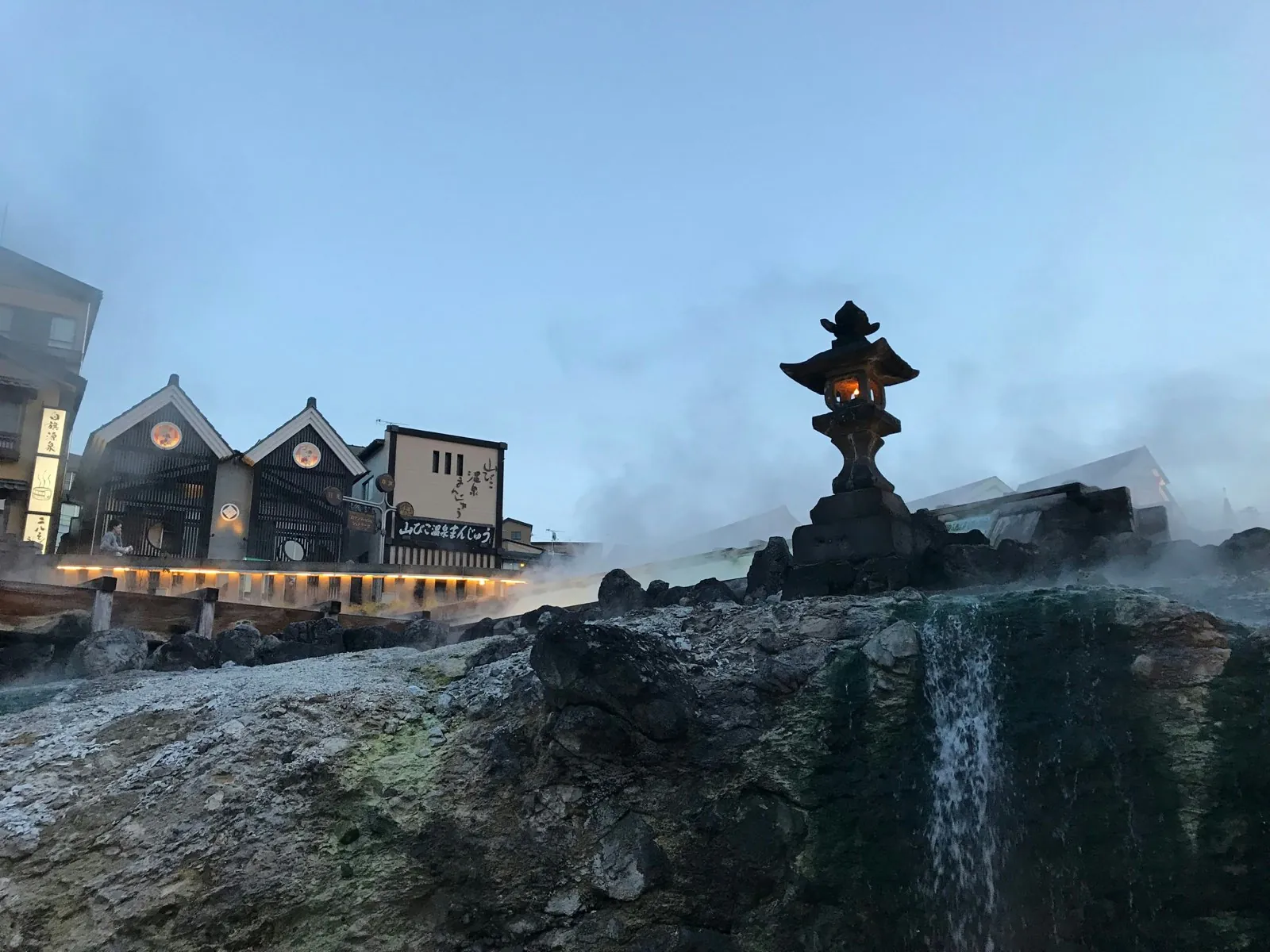
Steaming Yubatake hot-water field with a stone lantern in Kusatsu Onsen

Kusatsu Onsen: the thermal heart of the Gunma mountains

One of the three great onsen of Japan, with the largest natural flow of hot water in the country.

Kusatsu at a glance

For many Japanese, Kusatsu is the best onsen town in the country. It sits in the mountains of Gunma, at about 1,200 metres of altitude, and its hallmark is the Yubatake: a steaming "hot-water field" in the very centre through which the water flows and cools before being distributed to the baths. It has the largest natural flow of thermal water in Japan and a mountain-town atmosphere you explore on foot, bath by bath.

Kusatsu is a one- or two-night getaway from Tokyo. It has no train station of its own: you arrive by train at Naganohara-Kusatsuguchi and connect with a bus of about 25 minutes, or by direct bus from Tokyo. Its waters are very acidic and sulphurous, among the most potent in the country. The centre revolves around the Yubatake, lit up at night, with public baths and ryokan all around.

How many days should you spend in Kusatsu? Calculate your budget and split your nights automatically.
Plan my trip →

What to see and do in Kusatsu

The town is compact and everything orbits the Yubatake. Between the public baths, the yumomi spectacle and the Sainokawara thermal park there is plenty for one or two days.

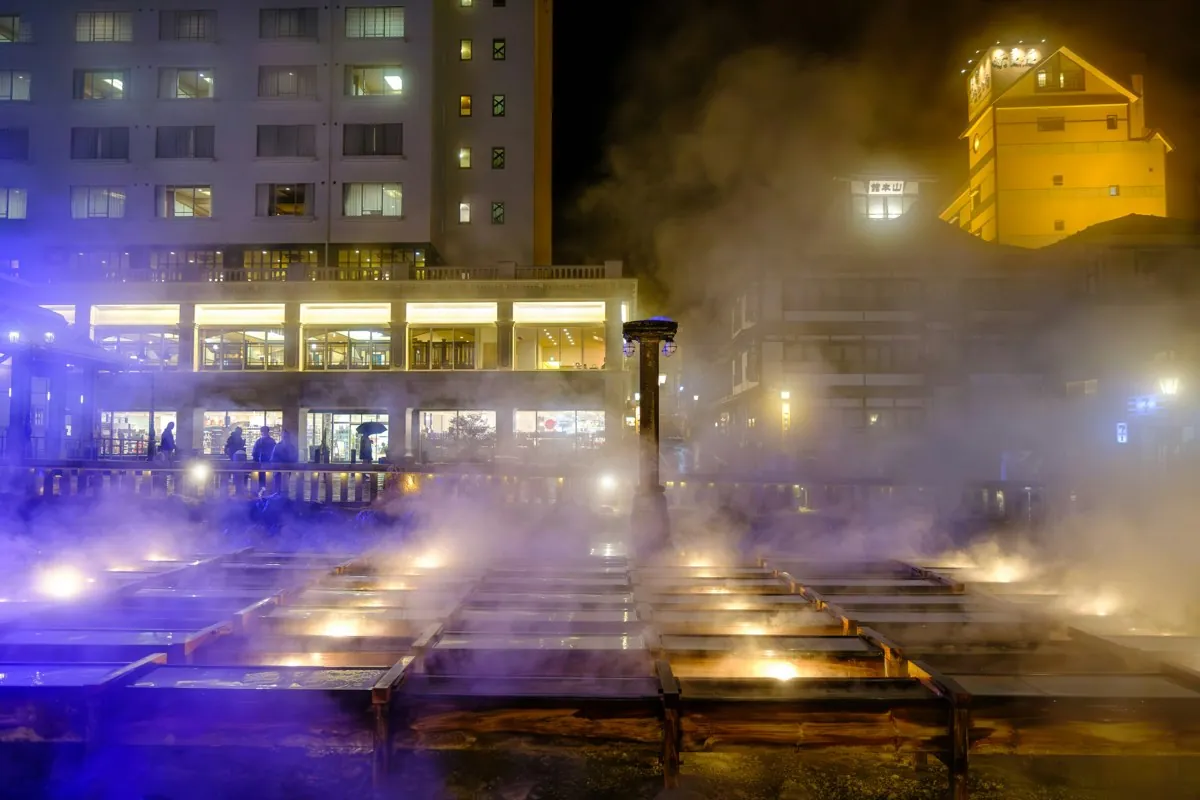
Illuminated wooden channels of the Yubatake with steam in Kusatsu at night

The Yubatake (hot-water field)

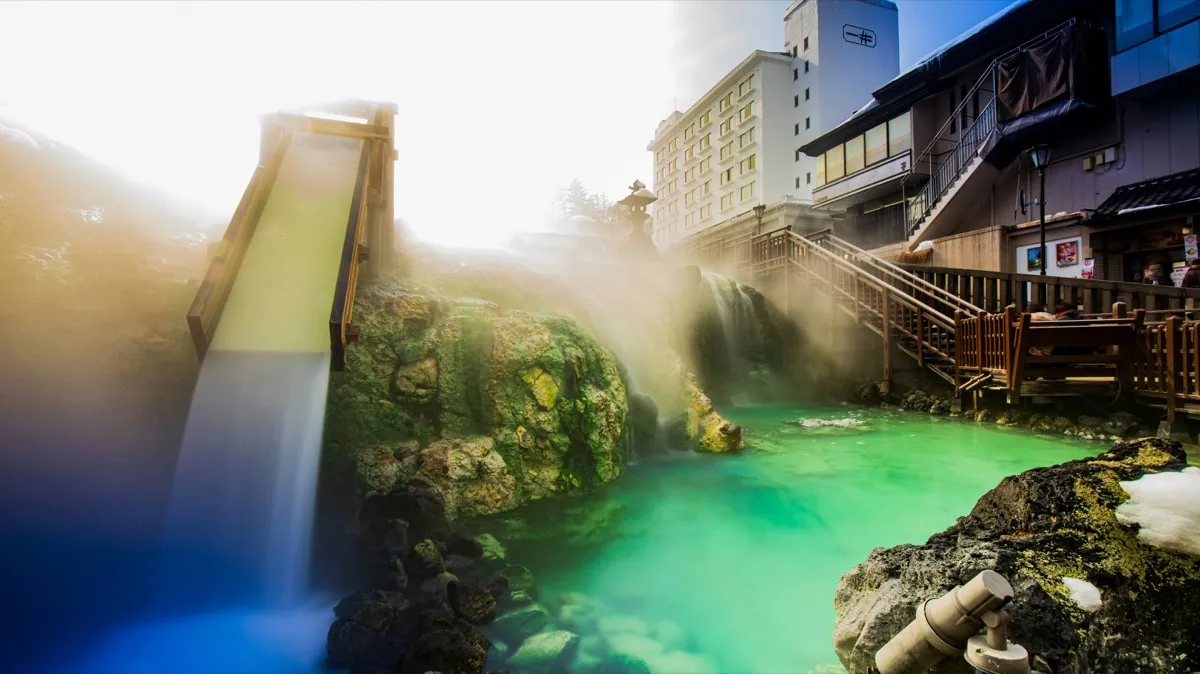
The symbol of Kusatsu: a stepped wooden channel through which thermal water at about 70 °C runs to cool naturally before reaching the baths. It steams constantly and lights up at night, becoming the town's meeting point. Shops, bathhouses and ryokan are concentrated all around it.

Green thermal waters and wooden cooling ramp of the Yubatake in Kusatsu

The yumomi and the public baths

As the water comes out too hot, in Kusatsu it is cooled by stirring it with large wooden paddles to the rhythm of traditional songs: this is the yumomi, which can be seen live at Netsunoyu, next to the Yubatake. To bathe, the large public baths such as Otaki-no-yu and Gozanoyu offer the full experience of Kusatsu's waters.

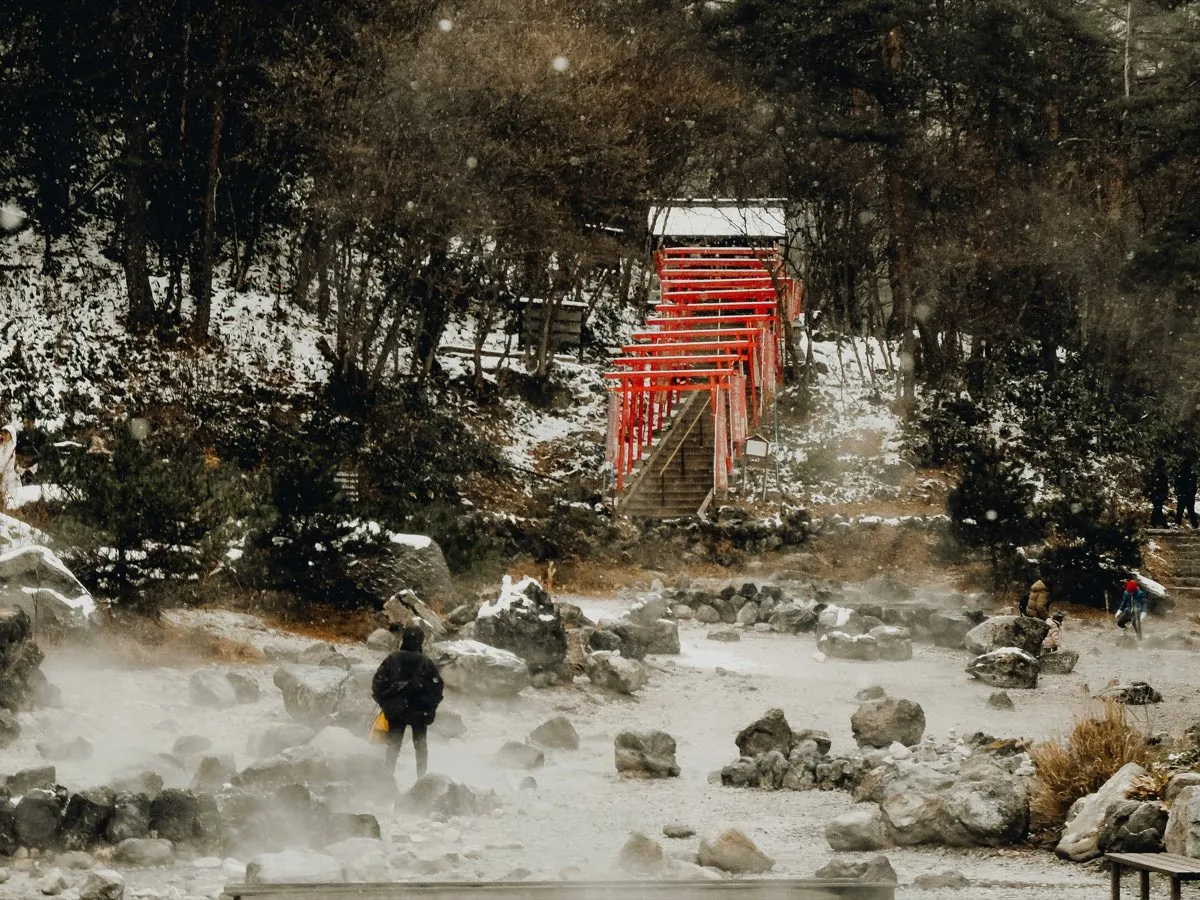
Sainokawara geothermal park with red torii and steaming springs in Kusatsu

Sainokawara and the outdoor bath

Climbing up from the centre, the Sainokawara park is dotted with steaming springs and streams that flow into a large outdoor bath (rotenburo) among the rocks and forest. It is the natural counterpoint to the bustle of the Yubatake and one of the most spacious open-air baths in the region.

Activities and experiences in Kusatsu

Recommended plans, sights and experiences, with budget guidance and direct links.

No activities are loaded for this city yet.
How to fit Kusatsu into your itinerary

Kusatsu fits as a one- or two-night thermal getaway from Tokyo, ideal if you want an authentic mountain onsen off the classic route. Bear in mind that the last leg is by bus, so it is worth booking the ryokan with a margin. To decide how many days to give it and how to combine it with the rest of the trip, use the planner or check the itineraries by duration.

Travel between cities

How much does the train to Kusatsu cost? Check whether the JR Pass is worth it by adding Kusatsu to your route.
Calculate JR Pass →

Frequently asked questions about Kusatsu

How do you get to Kusatsu Onsen from Tokyo?

By train, with the Limited Express "Kusatsu·Shima" from Ueno to Naganohara-Kusatsuguchi (about two and a half hours) and then a bus of about 25 minutes to the Kusatsu Onsen terminal. There are also direct highway buses from several Tokyo stations in about 4 hours. See the Japan transport guide →

Does the JR Pass cover the trip to Kusatsu?

The JR Pass covers the train to Naganohara-Kusatsuguchi (the nearest station), but not the final bus of about 25 minutes to the town, which costs around 780 yen each way. The spa town itself is not connected by train. Work out whether the JR Pass is worth it →

What is the Yubatake of Kusatsu?

It is the "hot-water field" in the centre of the town: a system of wooden channels through which the thermal water flows to cool naturally before being distributed to the baths. It steams non-stop, lights up at night and is the symbol and meeting point of Kusatsu.

What is the yumomi?

It is the traditional method for cooling Kusatsu's water, which rises too hot to bathe in. It is stirred with large wooden paddles to the rhythm of folk songs. Today it can be seen as a live spectacle at Netsunoyu, next to the Yubatake.

How many nights should you stay in Kusatsu?

One night is enough to see the Yubatake, bathe in a couple of public baths and enjoy the ryokan onsen. A second night allows you to add Sainokawara at a relaxed pace and truly disconnect, making the most of the long trip from Tokyo.

Are Kusatsu's waters strong?

Yes. Kusatsu's water is very acidic and sulphurous, among the most potent in Japan, with a reputation for skin benefits. It is worth staying hydrated, not stringing too many baths together in a row, and rinsing off when you get out if your skin is sensitive.