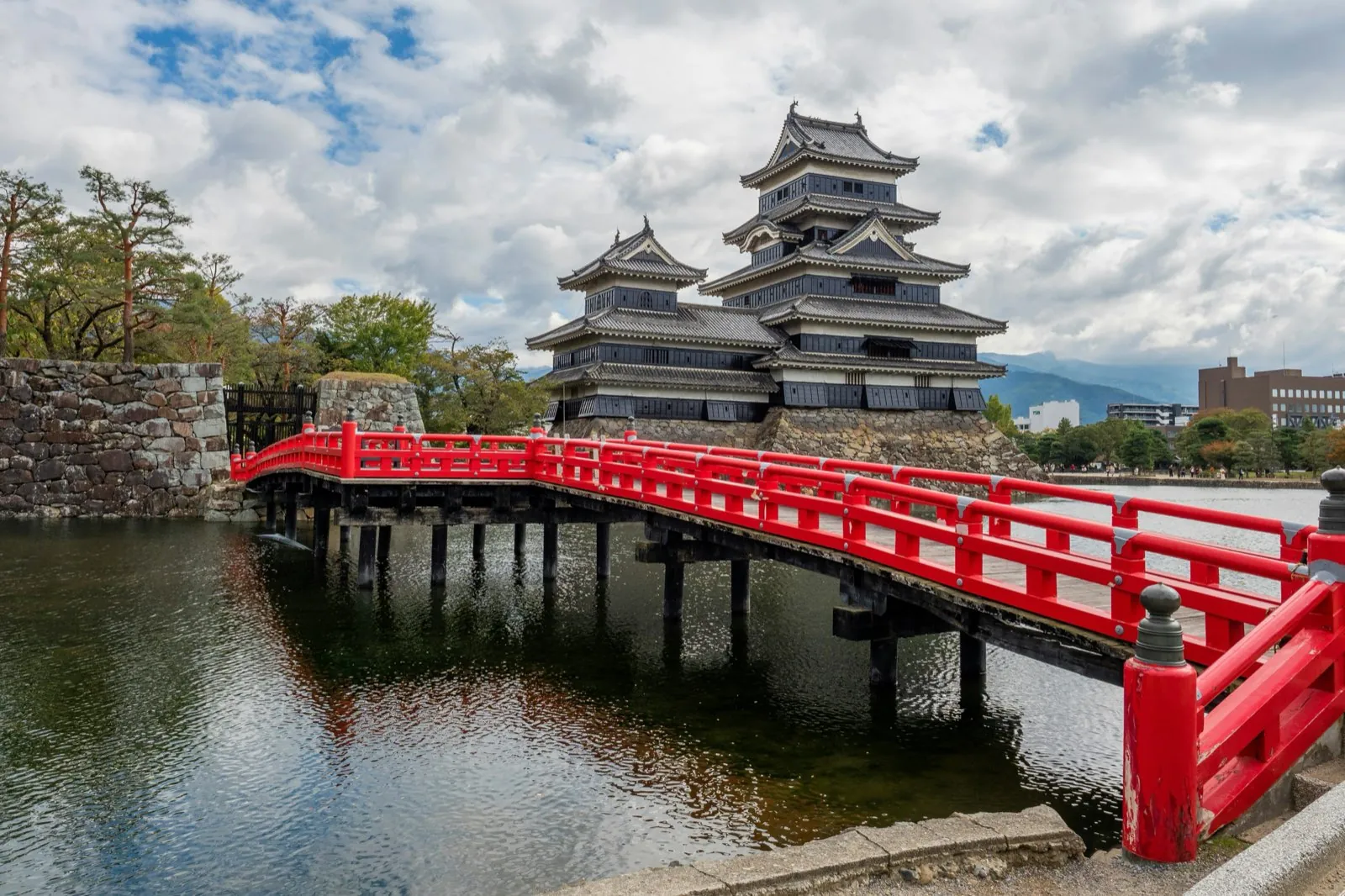
Matsumoto Castle with its black keep and the red bridge over the moat, in Nagano prefecture

Nagano: ancient temples, monkeys in the snow and the Japanese Alps

A mountain city with one of the most revered temples in the country and the most photographed image of Japanese winter.

Nagano at a glance

Just over an hour from Tokyo on the Hokuriku Shinkansen, Nagano combines the great Buddhist temple of Zenko-ji with an alpine setting that hosted the 1998 Winter Olympics. It is the natural base for seeing the famous Jigokudani snow monkeys, escaping to the slopes of Hakuba or Shiga Kogen and discovering the shrine and soba of Togakushi.

Nagano is reached directly by Shinkansen from Tokyo, which makes it a very realistic day trip or one- to two-night stop. With one night there is time for Zenko-ji and the trip to the Jigokudani monkeys; the second allows you to add Togakushi or Matsumoto Castle, about 50 minutes away by train. It fits well both in routes that then drop towards Kanazawa and the Alps and in winter getaways from the capital.

How many days should you spend in Nagano? Calculate your budget and split your nights automatically.
Plan my trip →

Key Nagano areas

The city centre revolves around Zenko-ji, but Nagano's major attractions are spread across the prefecture and reached by train or bus from the station.

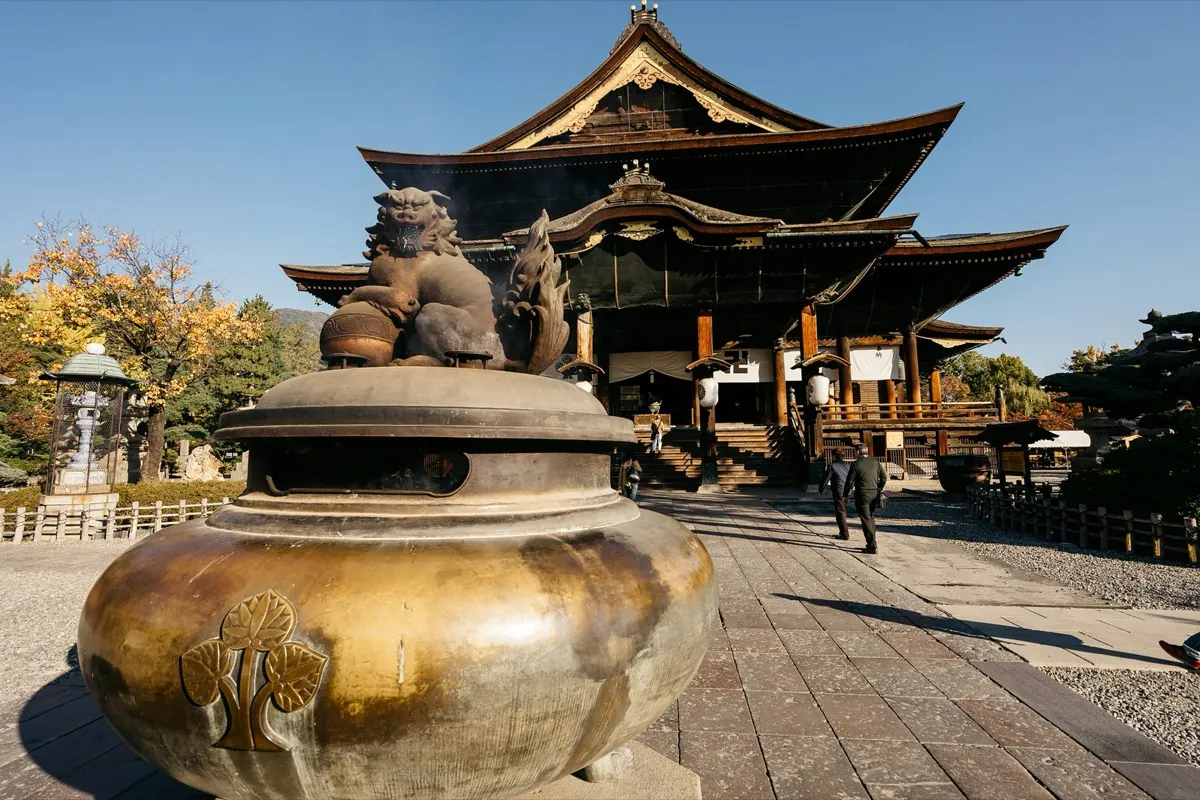
Wooden main hall of Nagano's Zenko-ji temple with its bronze incense burner

Zenko-ji temple

The spiritual heart of Nagano and one of the most important Buddhist temples in Japan, founded in the 7th century. Its great wooden main hall, a National Treasure, houses the first image of Buddha to reach the country. Do not miss the "okaidan meguri": a completely dark passage beneath the altar where you feel your way to the key of enlightenment. The approach avenue, Nakamise, is full of traditional shops and soba houses.

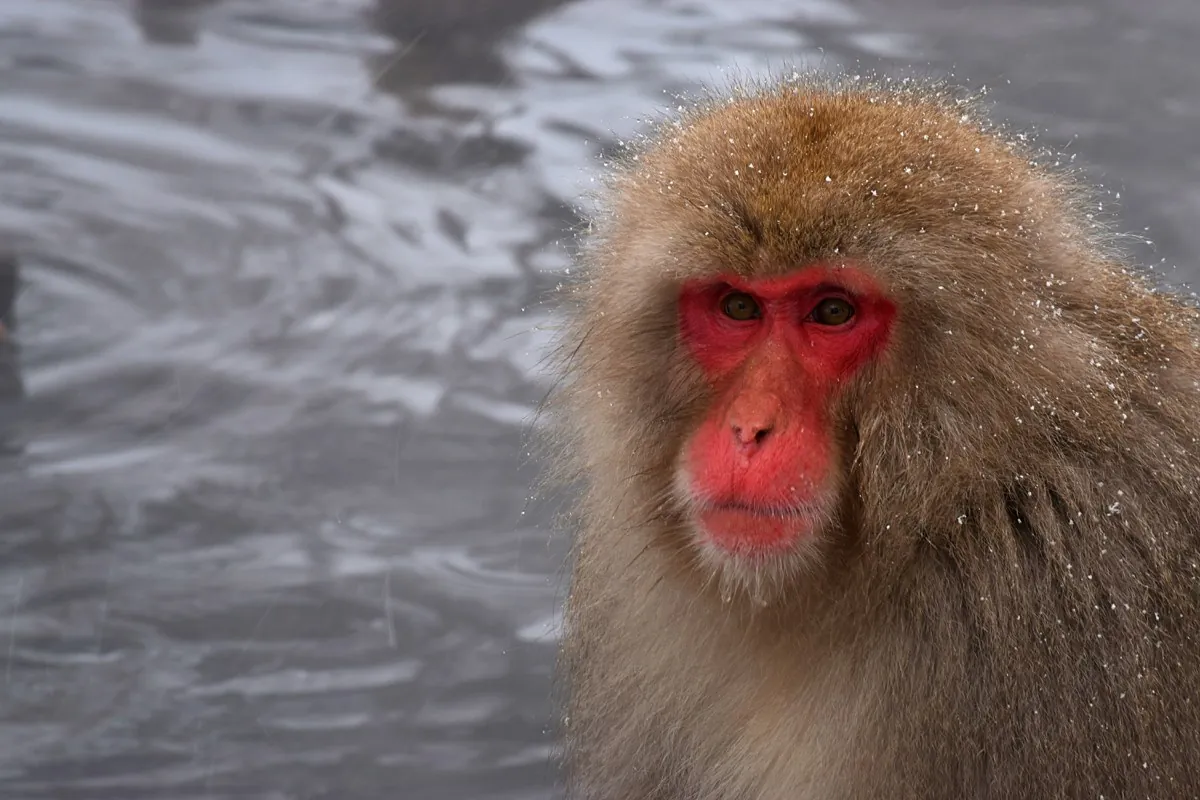
Close-up of a Japanese macaque with snow next to the Jigokudani hot-spring pool

Jigokudani and the snow monkeys

In the Jigokudani valley, within Yamanouchi, a troop of wild Japanese macaques bathes in a hot-spring pool. It is the most iconic image of Japanese winter, although the monkeys are present all year round. You reach it from Nagano on the Nagano Dentetsu train to Yudanaka, a short bus and a walk of about 30 minutes through the forest. Yudanaka Onsen is a good place to sleep if you want an early start.

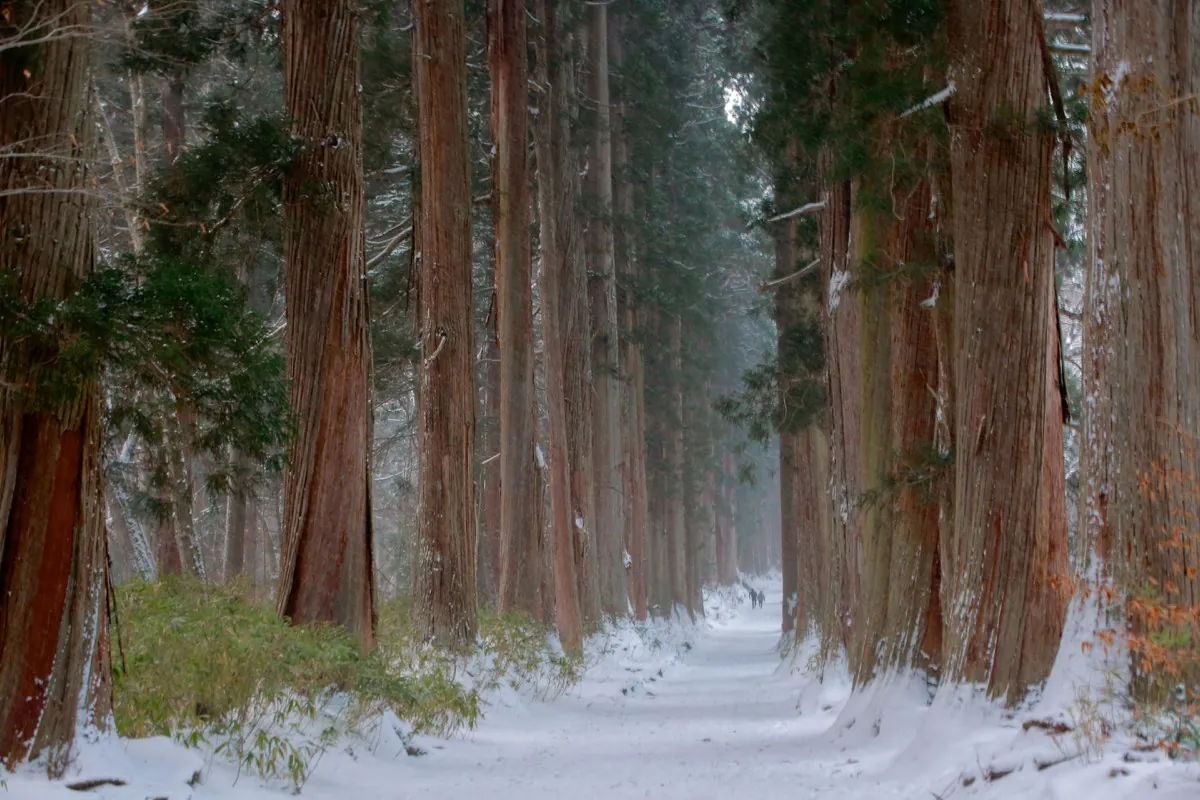
Path among giant cedars towards the inner shrine of Togakushi near Nagano

Togakushi, Hakuba and the Alps

Nagano is the gateway to the high mountains. Togakushi, an hour away by bus, brings together a shrine among millennia-old cedars, ninja legends and some of the best soba in the country. Further west, Hakuba and Shiga Kogen offer some of the best ski resorts in Japan, a legacy of the 1998 Winter Olympics held here. In summer, the whole area becomes hiking territory.

Activities and experiences in Nagano

Recommended plans, sights and experiences, with budget guidance and direct links.

No activities are loaded for this city yet.
How to fit Nagano into your itinerary

Nagano works as a day trip from Tokyo thanks to the direct Shinkansen, but gains a lot with one or two nights to see the Jigokudani monkeys without rushing. On longer routes it fits into the inland detour towards Takayama and Kanazawa, and combines very well with Matsumoto Castle. To see how many days you can fit, check the itineraries by duration and the Japan transport guide.

Travel between cities

How much does the train to Nagano cost? Check whether the JR Pass is worth it by adding Nagano to your route.
Calculate JR Pass →

Frequently asked questions about Nagano

How do you get to Nagano from Tokyo?

On the Hokuriku Shinkansen, direct from Tokyo and Ueno stations in approximately 1 hour 20 to 1 hour 40 minutes, depending on the service. The ticket costs around 8,340 yen each way and is covered by the JR Pass. See the Japan transport guide →

How many days should you spend in Nagano?

One or two nights. One is enough for Zenko-ji and the trip to the Jigokudani monkeys; the second allows you to add Togakushi or a getaway to Matsumoto Castle. It can also be seen as a day trip from Tokyo if you are only interested in the temple or the monkeys.

How do you get to the Jigokudani snow monkeys from Nagano?

From Nagano station you take the Nagano Dentetsu line train to Yudanaka, then a short bus to the entrance of the valley and, finally, a walk of about 30 minutes through the forest to the park. In total, around an hour and a half. There are also direct buses in high season.

When is the best time to see the Jigokudani monkeys?

The macaques are present all year round, but the iconic image of the monkeys bathing in the snow occurs from December to March. In those months the path can be icy, so appropriate footwear is advisable. In summer the valley is cool and there are far fewer people. See when to travel to Japan →

Is it worth combining Nagano with Matsumoto?

Yes. Matsumoto Castle, one of the few original castles in Japan with its 16th-century black keep intact, is about 50 minutes by train from Nagano. It is a very common combination for those who spend two nights in the area and want to see mountains, temple and castle on the same trip.