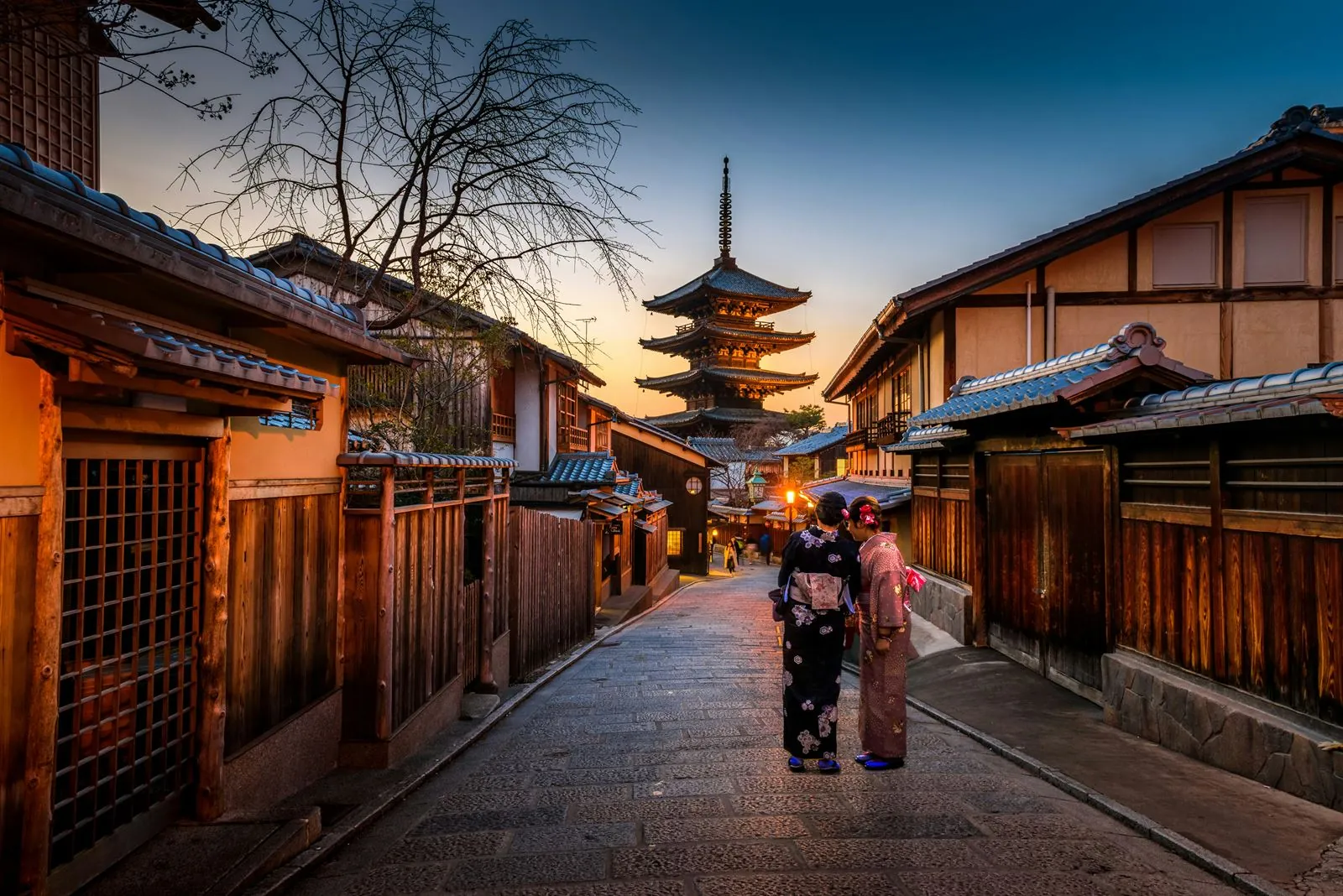
Traditional Higashiyama street in Kyoto at dusk with the Yasaka pagoda in the background

When to visit Kyoto: seasons and weather

Each season has its own version of Kyoto. This guide helps you choose the one that fits your trip.

Kyoto works all year round, but not all times are the same. The best time to visit Kyoto depends on what you are after: the cherry blossoms of late March and April and the momiji of November are spectacular, but they also bring the biggest crowds and the highest prices; October and May offer the best balance of weather, atmosphere and price; and January-February are the quietest and cheapest months. If you have flexibility, choosing the right month radically changes the experience.

The best time to visit Kyoto for what you are after

There is no single "best month" for Kyoto: it depends on what you prioritise. In quick summary:

  • Best balance (weather, atmosphere and price): October and May. Pleasant temperatures, beautiful gardens and less crowding than in the two high seasons.
  • Maximum visual spectacle: late March and the first half of April (sakura) or mid-to-late November (momiji). In exchange, the biggest crowds and the most expensive hotels of the year.
  • Cheapest and quietest: January and February. Almost empty temples, hotels at their minimum and, with luck, snow.
  • Festivals: May (Aoi Matsuri), July (Gion Matsuri, the most famous) and October (Jidai Matsuri).

Below we break down each season and a month-by-month summary. If you are planning the full route around the country, complement this page with the general guide on when to travel to Japan.

Summary by month: tourism, temperature and price

MonthAvg. temp.RainTourismHotel (double)Highlight
January4–9 °CLittleLow60–90 €Hatsumode, possible snow
February4–11 °CLittleLow60–90 €Cheapest month of the year
March8–16 °CMediumMedium-high90–140 €Start of sakura (end of the month)
April13–21 °CLittleVery high150–300 €Sakura at its peak, crowds
May18–25 °CLittleMedium90–130 €Lush green; Aoi Matsuri (15 May)
June22–28 °CHigh (tsuyu)Low70–100 €Rainy season
July25–33 °CHigh (start)Medium80–120 €Gion Matsuri (all July)
August25–34 °CMediumMedium-high90–130 €Gozan Okuribi (16 Aug); heat and humidity
September23–30 °CMediumMedium-low80–120 €Occasional typhoons
October17–24 °CLittleMedium90–130 €Ideal weather; Jidai Matsuri (22 Oct)
November11–19 °CLittleVery high140–280 €Momiji at its peak, busier than April
December5–12 °CLittleLow70–110 €Hatsumode preparations, New Year's Eve

Indicative mid-range hotel prices (double room per night) and average min-max temperatures; they vary each year. The euro amounts use an approximate conversion; to convert yen to euros at the day's rate use our yen converter. For an overview of the whole trip's costs, see how much it costs to travel to Japan.

Spring (March – May): the sakura and its crowds

The cherry blossom (sakura) is the most awaited and most crowded moment of the year in Kyoto. Maruyama Park, the Philosopher's Path, Arashiyama and the gardens of Daigo-ji temple fill with Japanese and international tourists during the week or two the blossoms last. In Kyoto, the average bloom starts between 28 March and 3 April, and the peak (mankai) usually falls between 3 and 12 April, with variations of up to two weeks depending on the previous winter. You have the detailed calendar by city in the guide to cherry blossoms in Japan.

The experience is genuinely spectacular: Kyoto in bloom is one of the most beautiful urban landscapes in Asia. But hotels cost double or triple the usual and the best ones sell out months ahead.

May is much quieter than April, has pleasant temperatures (18–25 °C) and the gardens are in full green. It also hosts the Aoi Matsuri (15 May), one of the three great festivals of Kyoto, with a parade of hundreds of participants dressed in Heian court style. It is one of the best times to visit Kyoto if you do not mind missing the sakura.

Best for

The sakura (April), for those who prioritise the visual experience over budget and can book 3–4 months ahead; or May, for those who want pleasant spring without the crowds or the prices of the cherry blossom.

Summer (June – August): heat, rain and the Gion Matsuri

Summer in Kyoto is hot and humid. July and August have average highs around 33–34 °C — with the odd higher day — and high humidity (around 70%) that makes the heat very noticeable. The city is surrounded by mountains that trap the hot air, so it is among the most sweltering Japanese cities in summer. June and early July are the rainy season (tsuyu), the most humid period of the year, with frequent showers.

Even so, July hosts one of the most famous festivals in Japan: the Gion Matsuri. It lasts all month, but the climax is the two processions of yamaboko floats (some centuries old) on 17 and 24 July. The nights before, the Yoiyama (14–16 and 21–23 July), turn central Kyoto into a night festival of yukata, street food stalls and traditional music.

In August, the Gozan no Okuribi (popularly Daimonji) on 16 August lights five giant bonfires shaped like kanji and other symbols on the mountains surrounding the city, to see off the spirits of Obon. It is one of the most impressive summer spectacles and is seen from many points of Kyoto.

Hotel prices in summer are lower than in spring and autumn, except around the Gion Matsuri and Obon, when they rise.

Best for

Those who want to experience the Gion Matsuri or the Gozan Okuribi, or who travel on a tight budget and accept the heat and humidity.

Autumn (October – November): the momiji and the second high season

Autumn is the second great high season of Kyoto, and the city is the undisputed capital of the momiji (the changing colour of the maple leaves). Temples and gardens turn red, orange and gold. The most celebrated spots are Eikan-do, Tofuku-ji (with its bridge over a sea of maples), Arashiyama and Kiyomizu-dera. You have the calendar and the best spots in the whole country in the guide to momiji in Japan.

In Kyoto, the peak usually falls in mid to late November, though it varies each year by the autumn temperatures. The weekends of that period are the busiest days of the year, even more than during the sakura. If you visit in November, opt for weekdays.

October is an excellent alternative: the temperatures are perfect (17–24 °C), there are fewer tourists than in November and, although the colour in the centre has not arrived yet, it is already showing at the higher elevations (Kurama, Ohara, Arashiyama). October also hosts the Jidai Matsuri (22 October), the "festival of the ages", with a large historical parade through the city in costumes from different periods of Japan.

Best for

The momiji (November), for those after the most photogenic Kyoto who can visit on weekdays in the second half; or October, for those who prefer ideal weather, fewer people and the Jidai Matsuri.

Winter (December – February): calm and snow-covered temples

Winter is the low season of Kyoto. The temples have little footfall, hotel prices drop 30–40% from high season and the city recovers a calm that is hard to find the rest of the year.

January and February are the coldest months (3–8 °C on average) and there are occasional snowfalls. When it snows, the gardens of Kinkaku-ji, Ryoan-ji and Arashiyama transform into scenes that look like classic Japanese paintings. It does not snow with enough intensity every year, but when it happens, those who are there have an extraordinary experience.

December includes Omisoka (Japanese New Year's Eve) and the first temple visits of the year (Hatsumode, around 1 January), one of the most deeply rooted traditions in the country.

Best for

Travellers on a tight budget, those who want to avoid crowds or who travel during the year-end period.

How to get the sakura and momiji dates right

The sakura and the momiji are the two reasons most travellers choose a specific date — and both are hard to pin down because they depend on each year's weather. These guidelines help reduce the risk:

Sakura (cherry blossoms)

  • Safe window: aiming for the first half of April maximises your chances. The average bloom in Kyoto starts between 28 March and 3 April, and the peak (mankai) falls around 3–12 April.
  • Forecasts: the Japanese weather companies (apps such as Sakura Navi or Weathernews) publish the bloom forecast from January and refine it each week. Check it in February-March if you buy flexible flights. More detail in the guide to cherry blossoms.
  • Plan B: if you arrive early and the cherry trees have not yet opened, those of the higher areas (Arashiyama, the mountains north of the city) bloom a few days later than the centre.

Momiji (autumn leaves)

  • Safe window: mid to late November. The central Kyoto peak usually falls in the second half of the month. You have the calendar by region in the guide to momiji in Japan.
  • Altitude = earlier: the colour comes down from the mountain to the valley. In early November there is already good momiji in Kurama, Ohara and the higher reaches of Arashiyama; the centre and the lower gardens come later.
  • A wider margin than the sakura: the leaf season lasts several weeks, so it is easier to get right than the cherry blossoms.

In both cases, the hotel prices in the table above shoot up right in these windows. If the dates are non-negotiable, book accommodation 3–4 months ahead.

How to avoid the crowds in high season

In April and November the most famous temples of Kyoto fill up from mid-morning. With some strategy you can enjoy the same places almost empty:

  • Get up early: the temples that open at 6:00–8:00 (Fushimi Inari is open 24h, Kiyomizu-dera opens at 6:00) are a different experience before 9:00. By mid-morning there are already queues.
  • Weekdays: the weekends of high season are the busiest days of the year. A Tuesday or Wednesday notably reduces the crowds.
  • Night light-ups: in spring and autumn, several temples open at night with the trees illuminated — Kodai-ji, Kiyomizu-dera and Eikan-do among them. It is among the most magical of Kyoto and many daytime tourists have already left. Check the dates, which change each year.
  • Alternative temples: while Kinkaku-ji and Arashiyama get saturated, places such as Tofuku-ji (autumn), the Shoren-in garden or the temples of Ohara offer the same seasonal splendour with a fraction of the people.
  • Spread out the visit: if you have several days, devote the central hours to museums, shopping or less crowded neighbourhoods and save the temples for first and last thing.
Choose your dates and plan your trip to Kyoto The planner calculates your itinerary with a real budget according to the season you choose.
Plan my trip

More travel guides

Frequently asked questions

What is the best time to visit Kyoto?

It depends on what you are after. For the best balance of weather, atmosphere and price: October and May. For the most spectacular visual experience: the first half of April (sakura) or mid-to-late November (momiji), in exchange for more people and high prices. To avoid crowds and pay the least: January and February. For the Gion Matsuri: July. See also when to travel to Japan for a global view of all the seasons.

What is the best month to visit Kyoto?

If you are after a single balanced month, October is the safest bet: pleasant temperatures (17–24 °C), little rain, an incipient autumn atmosphere and less crowding than November. May is the best alternative in spring. April and November give the most spectacular landscapes (cherry blossoms and maples) but are the months with the most people and the highest prices.

When are there fewer tourists in Kyoto?

January and February are the quietest months. The temples are practically empty, the prices are the lowest of the year (60–90 €/night for a double) and if there is snow, the city is extraordinarily beautiful. Read more in the Kyoto guide.

Do you have to book a hotel in Kyoto far in advance?

In sakura (April) and momiji (November) book 3–4 months ahead, because the good hotels sell out sooner. The rest of the year, 4–6 weeks is usually enough. To decide how many nights to spend in the city, see how many days in Kyoto.

When do the cherry blossoms bloom in Kyoto?

In Kyoto the average bloom starts between 28 March and 3 April, and the peak (mankai) falls around 3 to 12 April. The dates vary each year by up to two weeks depending on the previous winter, so the safest bet is the first half of April.

When is the Gion Matsuri and what is it like?

The Gion Matsuri lasts all of July. The key moments are the Yamaboko processions (decorated floats) on 17 and 24 July, and the Yoiyama nights (14–16 and 21–23 July) when the streets of Gion become a night festival of yukata, street food and traditional music. Find out more in the Gion guide.

Is Kyoto worth it in winter?

Yes, especially for those who value calm. The temples have very little footfall, the prices are the lowest of the year and the city has its own winter magic. If it snows (it does not happen every year), Kinkaku-ji and Arashiyama offer spectacular images. See how many days to spend in Kyoto to plan your visit well.

Is Kyoto worse than Osaka in summer because of the heat?

Kyoto is notably hotter than Osaka in summer. It is surrounded by mountains that trap the heat, creating a bowl effect. In July and August it can easily exceed 38 °C with high humidity. If you visit in summer, see the temples very early in the morning and rest indoors at midday.

When is the Daimonji in Kyoto?

The Gozan no Okuribi, popularly known as Daimonji, is on 16 August. Five large bonfires shaped like kanji and other symbols are lit on the mountains surrounding Kyoto to see off the spirits of Obon. It is one of the most impressive spectacles of the Japanese summer, visible from many points of the city.

Can I see the Kyoto temples lit up at night?

Yes. In spring (sakura) and autumn (momiji), several temples open at night with the trees illuminated: Kodai-ji, Kiyomizu-dera and Eikan-do are the best known. The dates change each year, so it is worth checking them when planning. It is one of the best ways to avoid the daytime crowds of high season.

Does the time of year change how many days to spend in Kyoto?

Not in itself, but in high season it is worth allowing more margin because the queues and journeys take longer. Work out your stay with the guide on how many days in Kyoto and fit it into a full itinerary through Japan according to your dates.