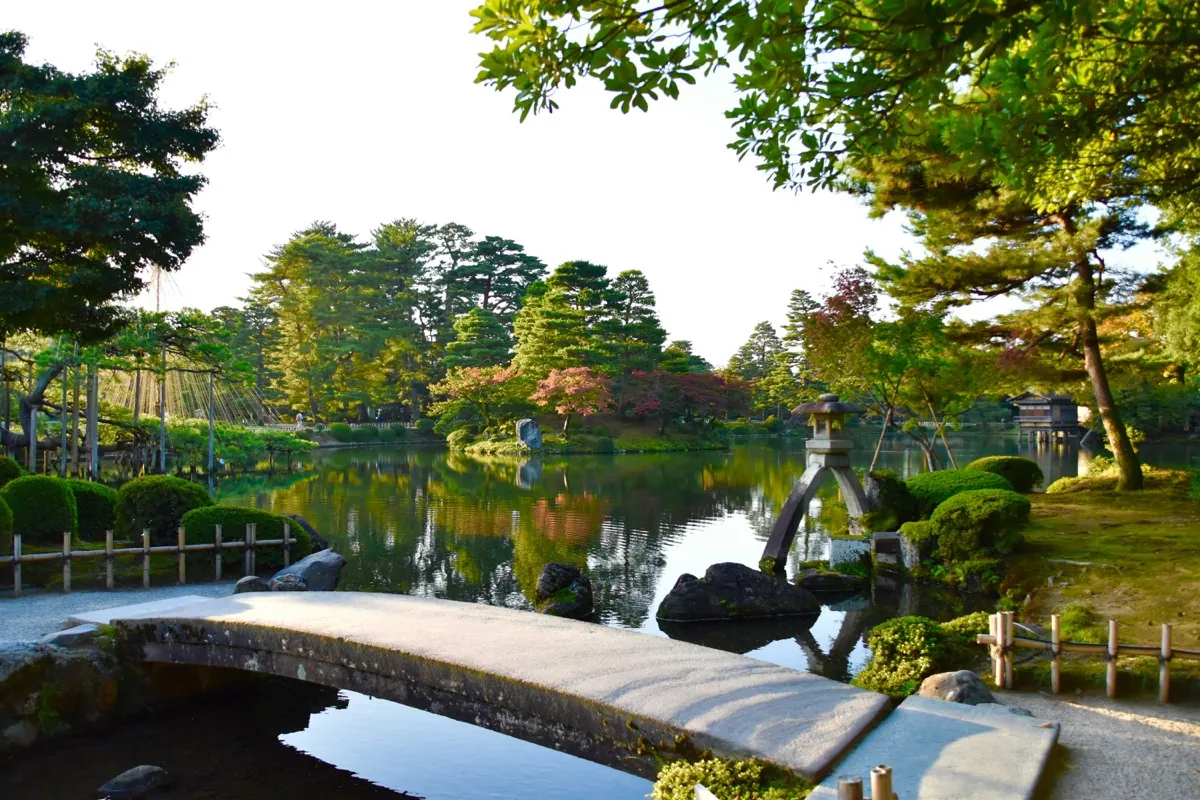
Kenroku-en and Kanazawa Castle
Kenroku-en is one of the three most beautiful gardens in Japan according to tradition: six attributes in harmony, four spectacular seasons and a centuries-old design. The restored castle is right next door.
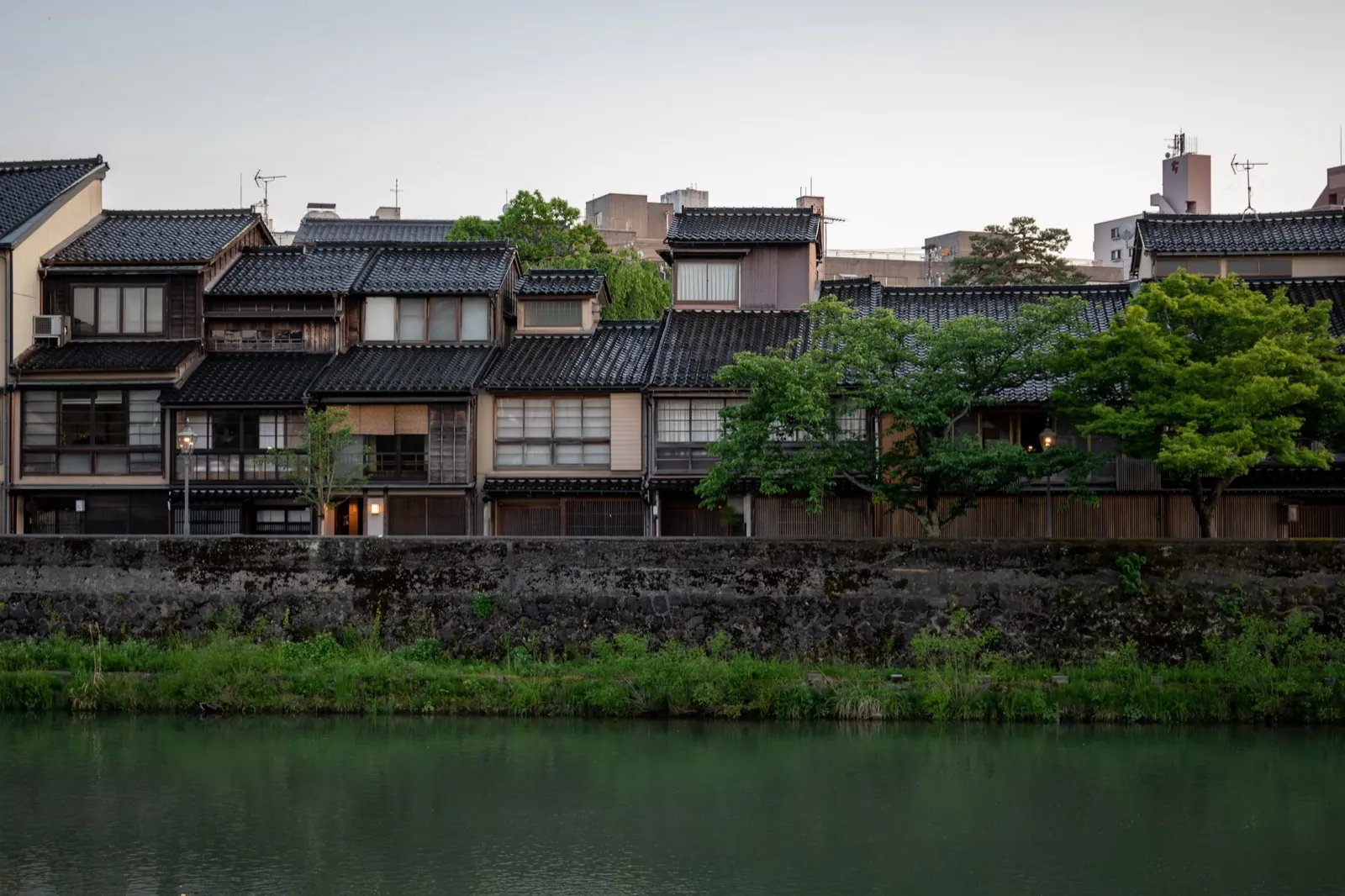
For centuries Kanazawa was the seat of the Maeda clan, the most powerful after the Tokugawa shogunate. That legacy translates into a spectacular garden, intact samurai and geisha districts, and a food scene that boasts some of the best seafood from the Sea of Japan.
Kanazawa is often called "the Kyoto of the Sea of Japan": it is less crowded and offers a more authentic experience of feudal Japan. Since 2015 the Hokuriku Shinkansen has connected it directly with Tokyo in about 2.5 hours, making it a very accessible detour. Two nights are enough to see it at a relaxed pace, and it combines very well with Takayama and Shirakawa-go.
See also: Takayama guide · Kyoto guide · Tokyo guide
The city is perfectly manageable on foot or by bus. Its main attractions are concentrated in three clearly distinct areas.
Kenroku-en is one of the three most beautiful gardens in Japan according to tradition: six attributes in harmony, four spectacular seasons and a centuries-old design. The restored castle is right next door.
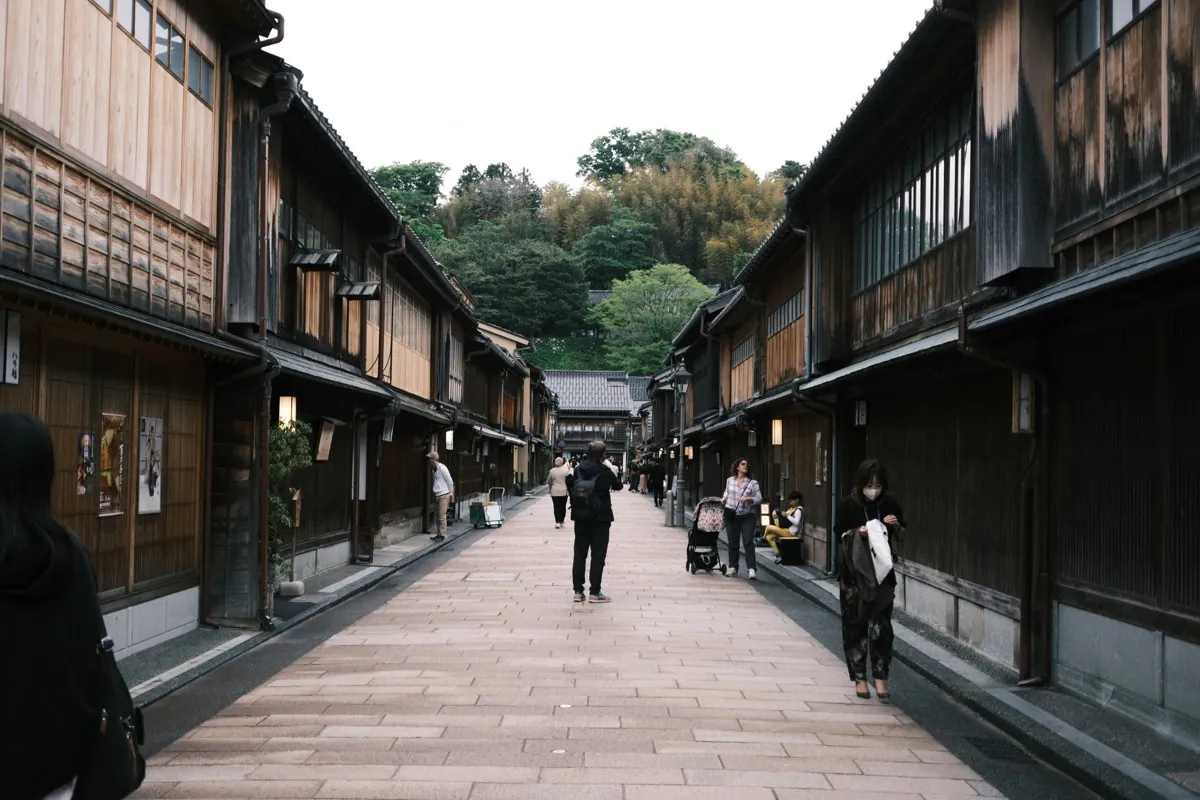
The best-preserved geisha district in Kanazawa, with 19th-century tea houses still in operation. Today it also houses gold-leaf (kinpaku) shops and charming cafes.
Nagamachi is the samurai district, with canals and mud walls marking out the old residences. Omicho Market, a few minutes away, is the place for fresh seafood breakfast at a good price.
Recommended plans, sights and experiences, with budget guidance and direct links.
Kanazawa lies outside the classic Tokyo-Kyoto-Osaka triangle, but the Hokuriku Shinkansen connects it directly with Tokyo in about 2.5 hours. It fits well as a two- or three-night detour during a longer route, and combines naturally with Takayama and Shirakawa-go inland. To see whether it fits into your available days, check the itineraries by duration.
Yes. Kanazawa offers a similar experience but without the crowds of Kyoto. Its geisha and samurai districts are in very good condition and the seafood from the Sea of Japan is exceptional.
From Tokyo, the Hokuriku Shinkansen is direct in about 2.5 hours. From Kyoto or Osaka, the Limited Express Thunderbird arrives in a little over 2 hours. Both options are covered by the JR Pass. See the Japan transport guide →
Yes, the standard JR Pass covers the Hokuriku Shinkansen to Kanazawa from Tokyo or from connections with the Tokaido Shinkansen line. Work out whether the JR Pass is worth it →
Two nights let you see the Kenroku-en garden, the castle, the Higashi Chaya and Nagamachi districts and the Omicho market without rushing. A single night covers the essentials, but the city invites a more leisurely pace.
Kanazawa produces 99% of Japan's gold leaf (kinpaku). It is commonly found in shops in the Higashi Chaya district applied to lacquerware, ceramics and desserts, including the famous ice cream covered in gold leaf.
