Owakudani volcanic valley with columns of steam at dusk in Hakone

Hakone: onsen, Mount Fuji and the ryokan experience

The most accessible window onto nature from Tokyo, with volcanoes, lakes and hot springs.

Hakone at a glance

Hakone is the quintessential getaway from Tokyo. Within a small radius it packs hot springs, views of Mount Fuji, a lake with a torii, an open-air art museum and the best ryokan to begin the experience of sleeping in traditional Japanese accommodation.

Hakone is the perfect stop between Tokyo and Kyoto if your route runs by shinkansen. It also works as a one- or two-night getaway from Tokyo: the Odakyu Romancecar train departs directly from Shinjuku in about 85 minutes. Many travellers book their first ryokan-with-onsen night here, one of the essential experiences of the trip.

How many days should you spend in Hakone? Calculate your budget and split your nights automatically.
Plan my trip →

Key Hakone areas

Hakone has its own transport pass (the Hakone Free Pass) that covers the mountain train, cable car, funicular and lake ferry. The most practical way to move between its attractions.

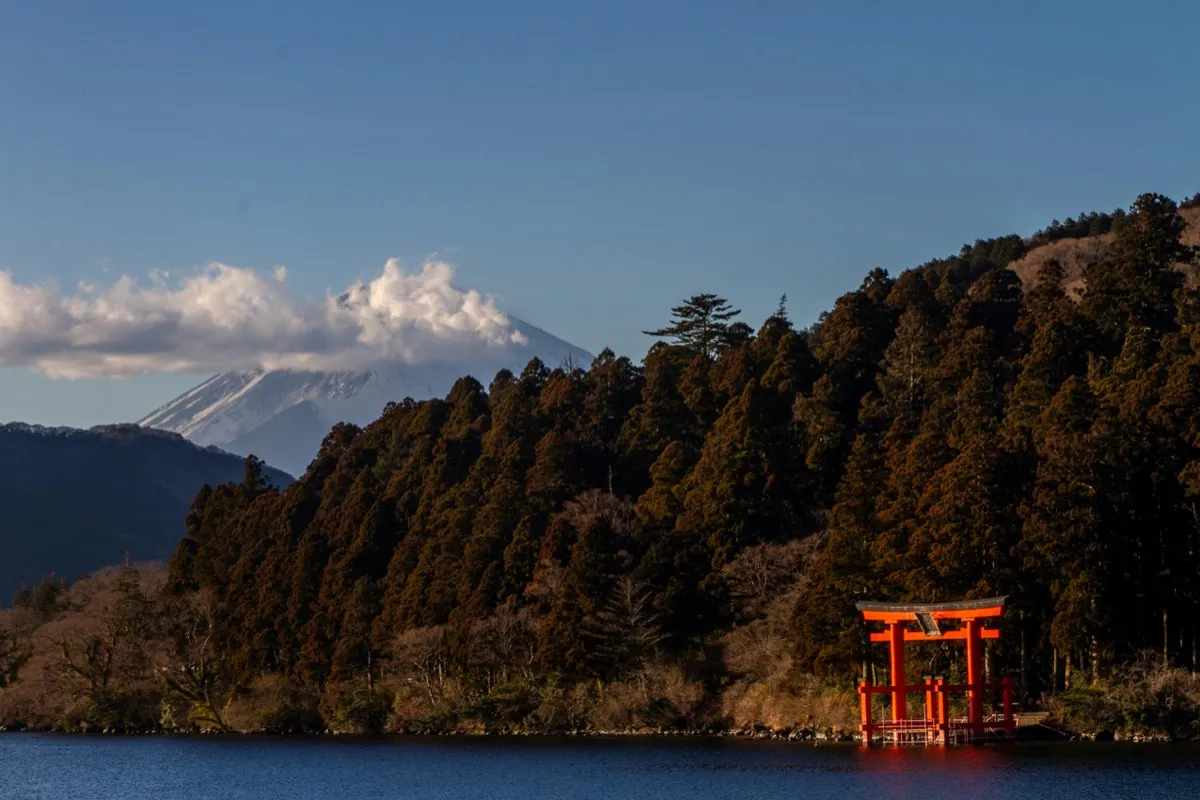
Red torii of the Hakone-jinja shrine on Lake Ashi with Mount Fuji in the background

Lake Ashi and Mount Fuji

The volcanic Lake Ashi offers the most iconic views of Mount Fuji, with the torii of the Hakone-jinja shrine emerging from the water. Sightseeing boats cross it and connect with the cable car within the Hakone Free Pass circuit.
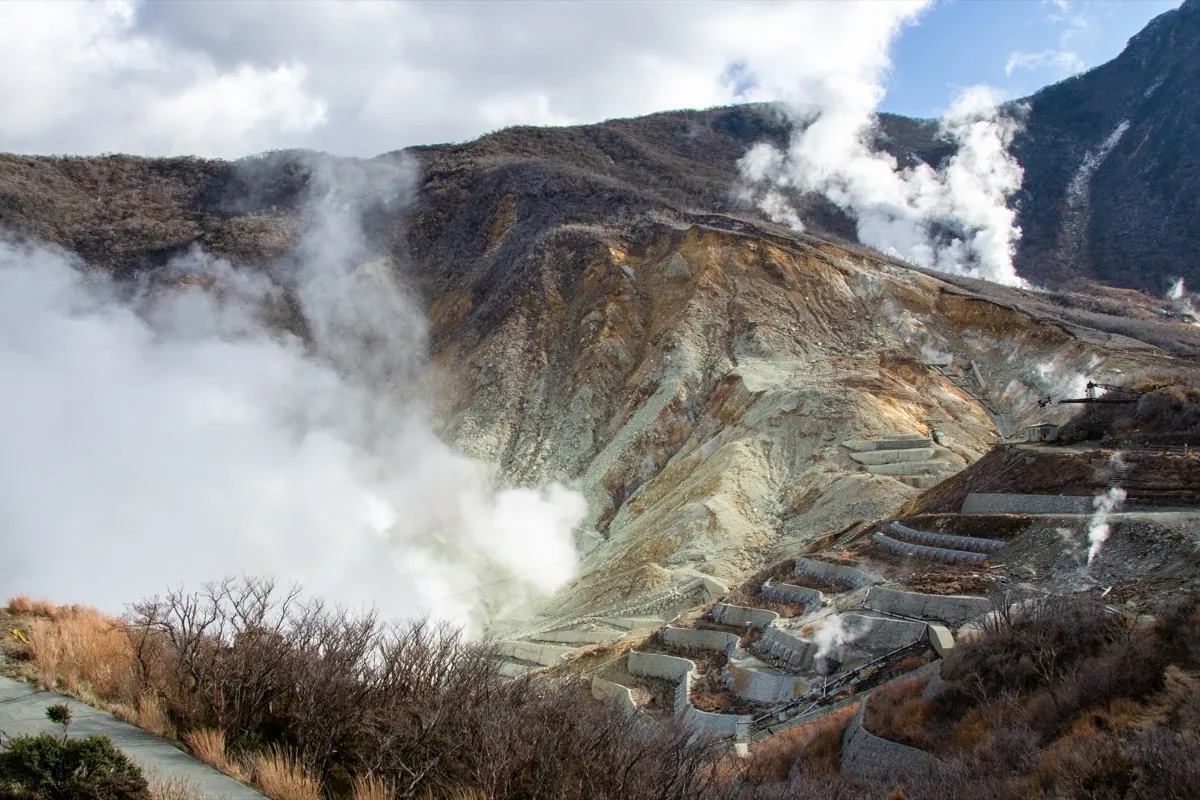
Sulphur fumaroles in the Owakudani volcanic valley, Hakone

Owakudani

The active geothermal area of Hakone: a valley of sulphurous fumaroles created by ancient eruptions. Here the black eggs (kuro-tamago) are cooked in hot springs, and you arrive by cable car with views of Fuji on clear days.

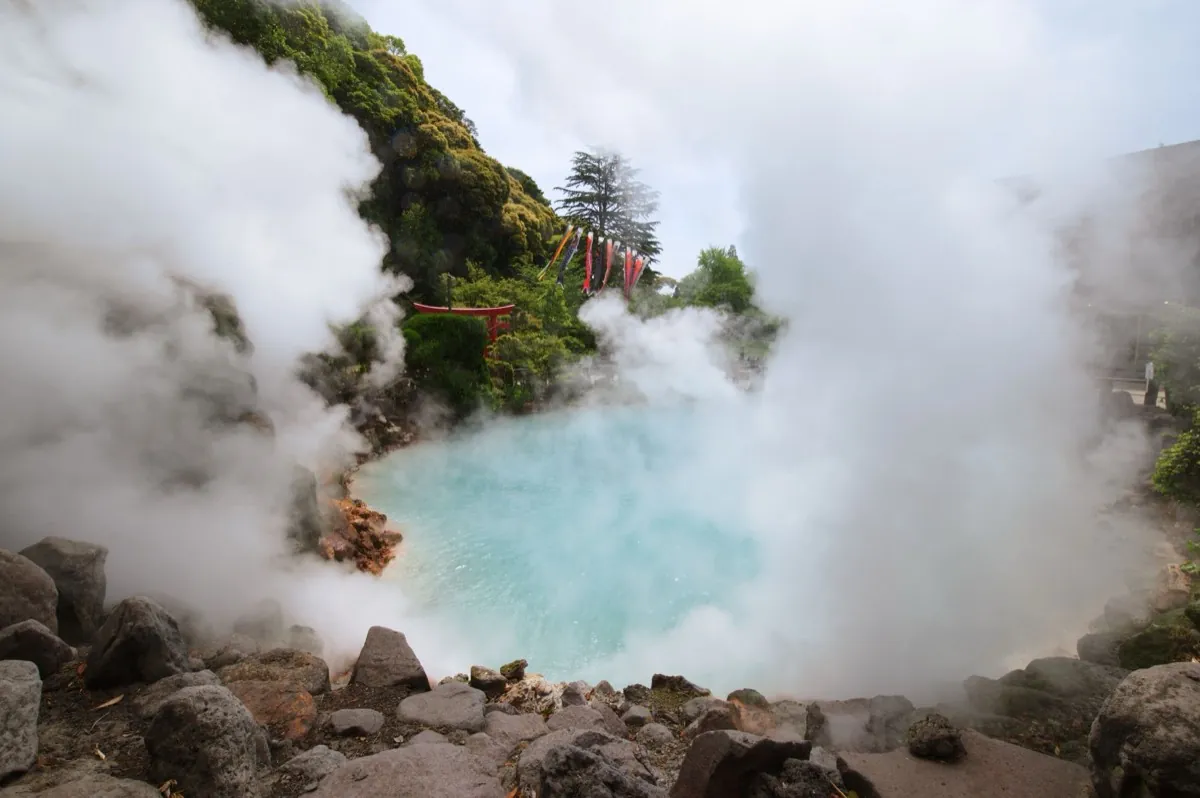
Steaming turquoise hot spring with a torii in Hakone

Onsen and hot springs

Hakone is one of the most celebrated hot-spring destinations in Japan: its natural springs rise at different temperatures and colours depending on the minerals underground. Bathing in a rotenburo (outdoor onsen) at a traditional ryokan is one of the essential experiences of the area.

Activities and experiences in Hakone

Recommended plans, sights and experiences, with budget guidance and direct links.

Ninja and samurai experience at Odawara Castle
Tradition, Workshops · Guided ninja and samurai experience in Odawara, the gateway to Hakone, with an expert and a bilingual guide; from around 3.000 ¥.
2.500 - 4.999 JPY
Komagatake ropeway (Hakone)
Nature, Viewpoints · Ropeway up Mount Komagatake from Lake Ashi with views of Mount Fuji and the Izu islands; round-trip ticket around 1.800 ¥.
1.500 - 2.499 JPY
Hakone-Yumoto Onsen (the gateway hot-spring town of Hakone)
Onsen, Tradition · Hakone's thermal gateway, with dozens of ryokan and public baths beside the Hayakawa river; day bathing in a sentō from 500-1.300 ¥.
1 - 1.499 JPY
Owakudani (great boiling valley) and the volcano's black eggs
Nature, Viewpoints · Active volcanic valley in Hakone National Park with fumaroles and sulphur-boiled eggs said to lengthen life; free access to the viewpoint, ropeway extra.
1 - 1.499 JPY
Hakone Ropeway
Nature, Viewpoints · Japan's longest ropeway connects Sounzan with Togendai crossing Owakudani; views of Fuji and the volcano; ~1.400 ¥ per leg.
1.500 - 2.499 JPY
Gotemba Premium Outlets (international brands with Fuji as a backdrop)
Shopping, Viewpoints · 210 luxury and international-brand shops with Mount Fuji as a backdrop; reached by bus from Hakone-Yumoto or Shinjuku; free access.
Free

How to fit Hakone into your itinerary

Hakone fits perfectly between Tokyo and Kyoto as a one- or two-night stop. Taking the shinkansen from Odawara (20 min by train from Hakone) is the most convenient way west. Many travellers book the ryokan before any other accommodation on the route, and combine it with Kamakura by taking advantage of the stop at Odawara. To see where it fits within the trip, check the itineraries by duration.

Travel between cities

How much does the train to Hakone cost? Check whether the JR Pass is worth it by adding Hakone to your route.
Calculate JR Pass →

Frequently asked questions about Hakone

How do you get to Hakone from Tokyo?

The most convenient option is the Odakyu Romancecar train from Shinjuku, which reaches Hakone-Yumoto in about 85 minutes without transfers. With a JR Pass, the alternative is the shinkansen to Odawara and then connecting with the Hakone mountain train. See the Japan transport guide →

Does the JR Pass cover transport in Hakone?

The JR Pass covers the shinkansen to Odawara (the nearest station), but not the Odakyu Romancecar train or most of the internal transport in Hakone. The Odakyu Hakone Free Pass is more convenient for getting around the area. Work out whether the JR Pass is worth it →

What is the Hakone Free Pass and is it worth it?

It is an Odakyu pass that covers unlimited use of the mountain train, the funicular, the cable car and the Lake Ashi ferry, plus the journey from Shinjuku. As almost the entire Hakone sightseeing circuit uses these transports, it usually pays off even for a single day of visiting.

How many nights should you stay in Hakone?

One or two nights. With one night there is time to do the Lake Ashi circuit, Owakudani and the open-air museum, and to enjoy the ryokan onsen. A second night makes sense if you are after total disconnection or want a margin in case Fuji appears clear on another day.

Can you always see Mount Fuji from Hakone?

No. Fuji is often hidden among clouds, especially in summer. The months with the highest chance of clear skies are January, February and October. Check the forecast before planning specific viewing activities.

What is the difference between a public onsen and a ryokan with onsen?

Public onsen (sento or shared baths) are inexpensive and culturally very authentic. Upmarket ryokan include a private onsen in the room or on a terrace, which means more privacy at a higher price.