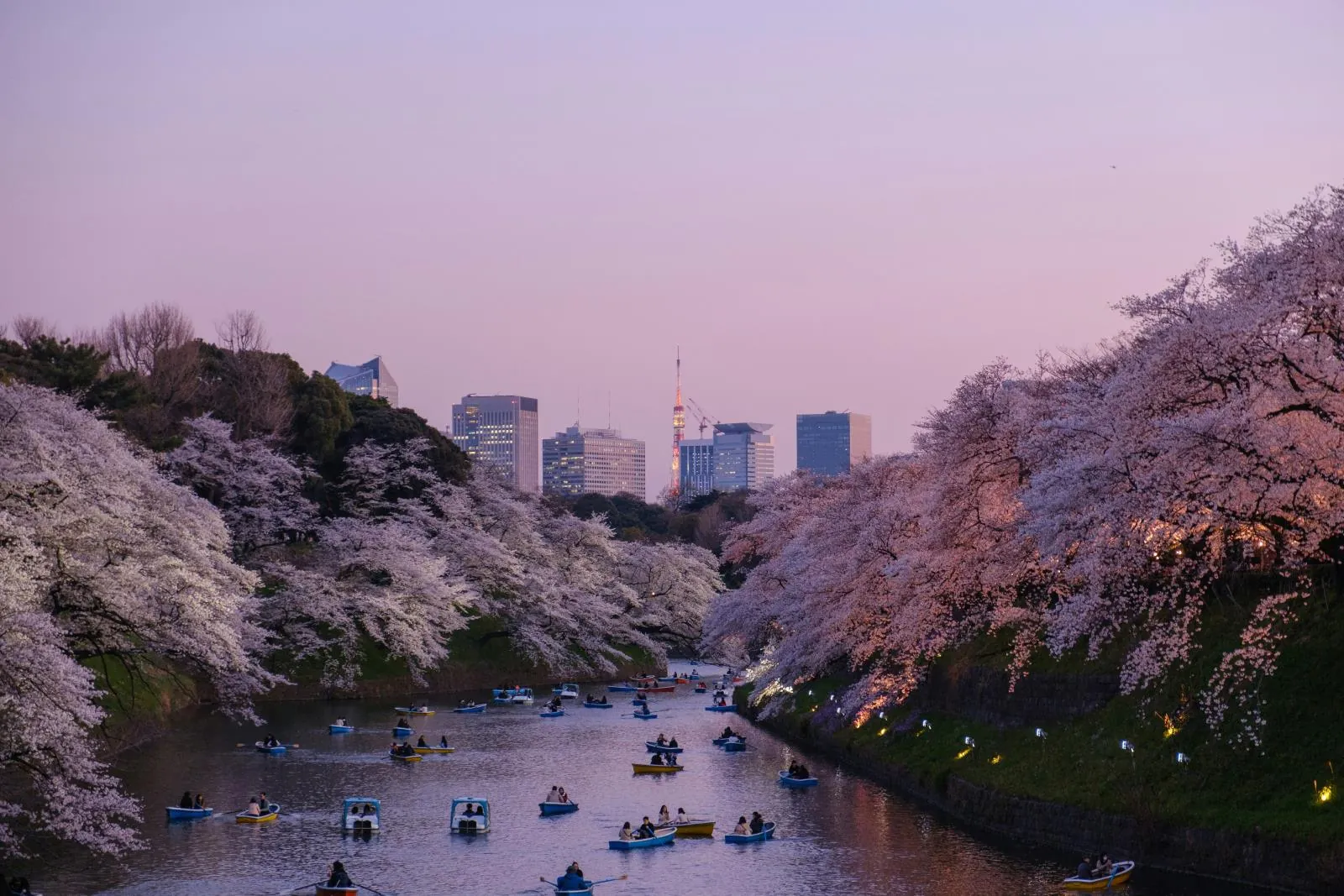
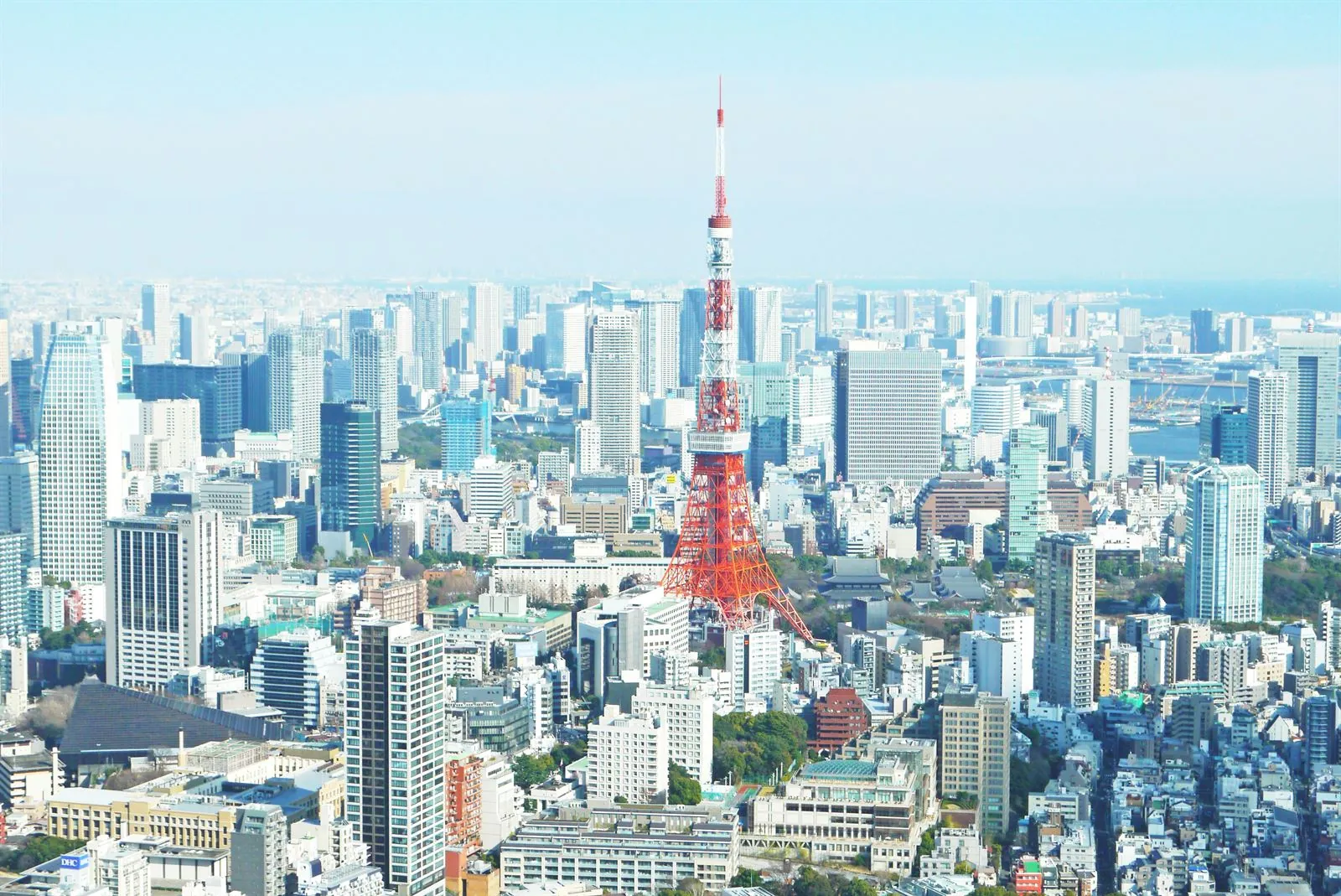
Night view of Tokyo, the first stop of a 14-day itinerary through Japan

Japan itinerary in 14 days: two full weeks

The classic route plus Hakone and Hiroshima, day by day, with what to see each day and the activities you can book.

Two weeks is, for many travellers, the perfect duration for Japan: it covers the classic Tokyo–Kyoto–Osaka route and adds the two most desired extensions, Hakone to see Mount Fuji and Hiroshima with Miyajima. This is the 14-day route day by day, with real activities you can book and the option to tailor it to your taste.

Search for your flight to Japan

Compare flight prices to Japan from your city and book at the best price. The departure airport and the dates are indicative: change them to suit your trip.

What does the 14-day itinerary add?

Two weeks is, for many travellers, the perfect itinerary through Japan: the one that covers the classic Tokyo–Kyoto–Osaka route and also gives room for the two extensions almost everyone would want to include and that on shorter trips have to be sacrificed: Hakone, to see Mount Fuji and sleep in a ryokan with an onsen, and Hiroshima with Miyajima, which many consider the most powerful moment of the whole trip.

Compared with the 10-day itinerary, the extra days are spread between those two stops and a fourth full day in Kyoto, which is the city that most appreciates the time. It is still a comfortable trip: all the transfers are made on the Shinkansen and the route moves in a single direction, from Tokyo westwards, without backtracking.

About the JR Pass it is best not to be guided by intuition. Although the trip lasts two weeks, this route moves in a single direction and without returning to Tokyo, so the sum of long legs (Odawara–Kyoto, Kyoto–Hiroshima and Hiroshima–Osaka) stays well below the price of the 14-day pass. We break it down in the budget section: in most cases individual tickets are better value.
The 14-day route at a glance

The usual backbone, extended with Hakone (on the way to Kyoto) and Hiroshima (a two-day trip from the west). Arrival in Tokyo and departure from Osaka.

Tokyodays 1–4
Hakoneday 5
Kyotodays 6–9
Hiroshimadays 10–11
Osakadays 12–14

Day-by-day itinerary (14 days)

A realistic split for a first visit with time. The times are indicative: adjust them to your pace and the season.

1

Arrival in Tokyo and first orientation

From the airport to the hotel on the Narita Express or Limousine Bus, top up your Suica card and keep the day for something light: Shinjuku at dusk, dinner at an izakaya and an early night to beat the jet lag.

Tokyo · base 1
2

Modern Tokyo: Shibuya, Harajuku and Shinjuku

Harajuku (Meiji-jingū and Takeshita), Shibuya (the most famous crossing in the world and the Shibuya Sky viewpoint) and Shinjuku at night among izakayas and neon.

3

Traditional Tokyo: Asakusa, Ueno and Akihabara

The Senso-ji temple and Nakamise in Asakusa, the park and museums of Ueno at midday, and the electronics and otaku culture of Akihabara in the afternoon.

4

Day trip to Kamakura or a flexible day

A day trip to Kamakura (1 hour by train) with its open-air Great Buddha and temples among the mountains, or a day for neighbourhoods such as Yanaka, Shimokitazawa or Nakameguro. Pack a light backpack for Hakone.

5

Hakone: Mount Fuji, Lake Ashi and onsen

Hakone is 90 minutes from Tokyo on the Romancecar. The loop combines a funicular, a ropeway over the Owakudani volcanic valley and a boat across Lake Ashi, with Fuji in the background if the day is clear. Sleep in a ryokan with an onsen: the best rest of the trip.

Hakone · 1 night
6

Hakone → Kyoto and the Gion district

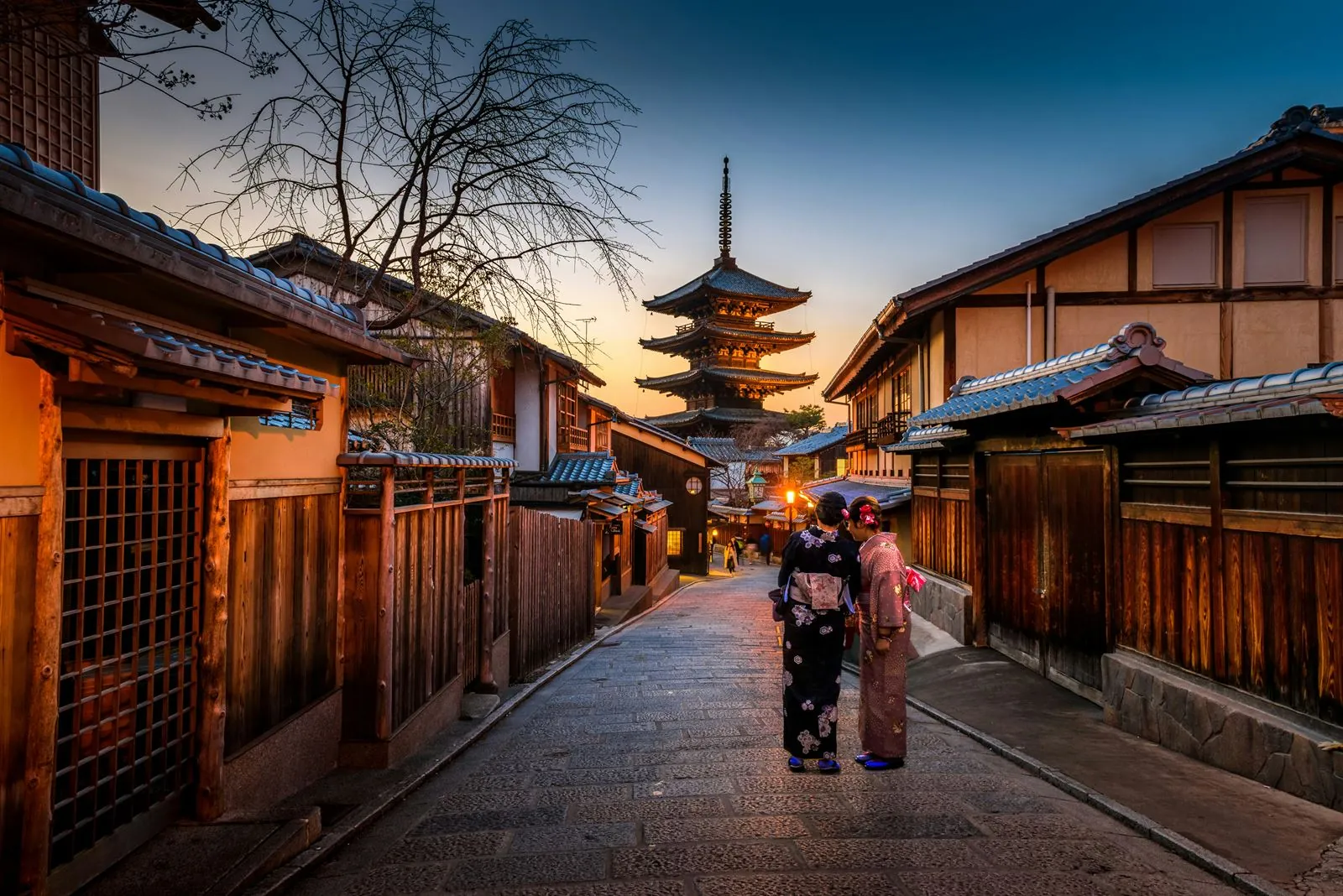
Go down to Odawara or Mishima and take the Shinkansen to Kyoto. Drop your luggage and devote the afternoon to Gion: Hanamikoji, Higashiyama and Kiyomizu-dera at sunset.

Kyoto · base 2
7

South Kyoto: Fushimi Inari

Get up early to reach Fushimi Inari before 8:00 and climb among the orange torii with almost no one around. In the afternoon, Tofuku-ji or the Tofukuji area and its gardens.

8

West Kyoto: Arashiyama and the north

The Arashiyama bamboo grove and Tenryu-ji in the morning; in the afternoon, the golden pavilion of Kinkaku-ji and the rock garden of Ryoan-ji in the north of the city.

9

Day trip to Nara from Kyoto

Nara is 45 minutes away on the Kintetsu train. The deer of the park, Tōdai-ji with its Great Buddha and the Kasuga-taisha shrine. Details in the day trip to Nara from Kyoto. Back to Kyoto to sleep.

10

Kyoto → Hiroshima: Peace Park

Shinkansen to Hiroshima (about 1h40). The Peace Memorial Park and its museum are one of the most reflective visits of the trip. A Hiroshima-style okonomiyaki dinner.

Hiroshima · base 3
11

Miyajima: the floating torii

About 40 minutes in total from Hiroshima (JR train to Miyajimaguchi and a 10-minute ferry): the island of Miyajima and the Itsukushima shrine with its torii over the sea. Arrive early to see it before the groups and climb (or take the ropeway) up Mount Misen.

12

Hiroshima → Osaka: Dotonbori

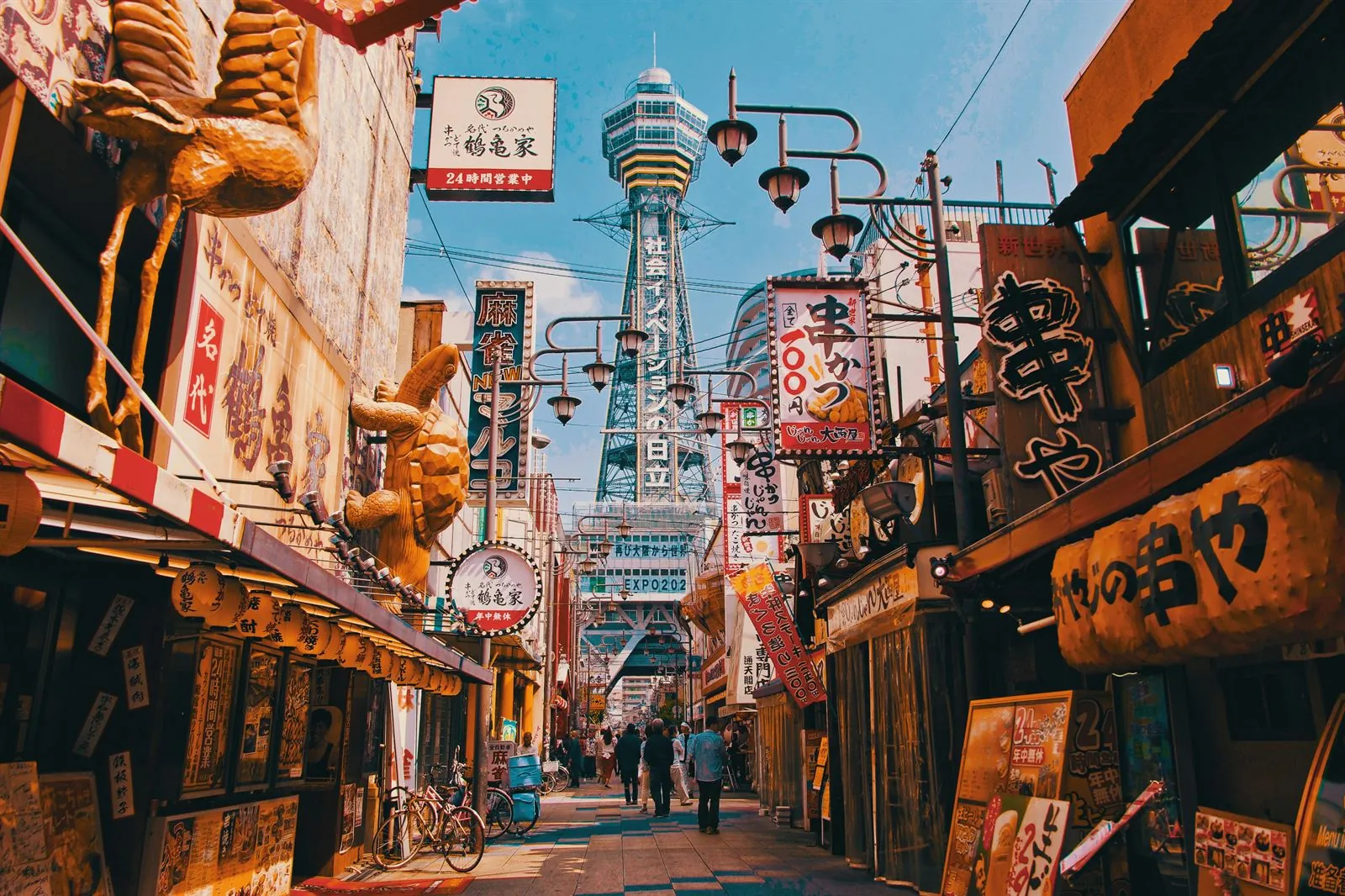
Shinkansen to Osaka (1h20). Drop your luggage and devote the evening to Dotonbori: takoyaki, okonomiyaki and kushikatsu through the alleys of Namba.

Osaka · base 4
13

Osaka: castle, Shinsekai and markets

Osaka Castle in the morning, the retro Shinsekai district and the Kuromon Ichiba market for snacks. A free afternoon for shopping in Umeda or Universal Studios if you travel with children.

14

Osaka and return flight

A final day depending on the flight time. Kansai International Airport (KIX) is 30–50 minutes away on the Haruka train. If your hotel offers luggage forwarding, send it to the airport the day before to travel light.

Logistics of a two-week trip

On a two-week trip with four or five bases, logistics matter more than on a short trip. These details make the difference between dragging suitcases and travelling light:

  • Luggage forwarding (takuhaibin). The Japanese courier service (Yamato, Sagawa) takes your suitcase from one hotel to another in 24 hours for 1,500–2,500 ¥. It is ideal on the day you go to Hakone: send the large suitcase straight from Tokyo to Kyoto and do Hakone with just a one-night backpack. The hotel reception arranges the shipment.
  • One checked suitcase and a day backpack. With five cities, travelling light is key. Japanese hotels have small rooms and station lockers come in limited sizes. Check what to bring in the packing guide for Japan.
  • Laundry mid-trip. Almost all mid-range hotels have coin laundries for 200–400 ¥ a cycle. Doing a wash around day 6–7 (in Kyoto) lets you bring half the clothes.
  • Calculate the JR Pass before buying it. On this one-way route individual tickets are usually cheaper than the 14-day pass, but it changes if you add long detours. If it does turn out to be worth it, remember the pass is activated on the date you choose and lasts 14 consecutive calendar days: since you spend day 1 jet-lagged in Tokyo without moving, it is best to activate it on the day of the first long leg. Run the numbers with the JR Pass calculator.
  • Book the Hakone ryokan in advance. Good ryokan with an onsen and a kaiseki dinner sell out, especially at the weekend and in momiji season. Book it as soon as you have the dates, before the rest of the hotels.
  • Constant internet connection. To move between five cities with Google Maps and train schedules, an eSIM or pocket wifi is essential. You have the options compared in the guide to internet in Japan.

What to book on this route

A selection of real experiences from our catalogue for each stop. Each card links to its page, its booking page and its location on the map.

Activities to book in Tokyo

Four days in Tokyo give you a lot: these are some of the activities you can book or locate on the map.

Day trip to Mount Fuji from Tokyo
Nature, Viewpoints · A day trip to Mount Fuji and Lake Kawaguchi from Tokyo with a guide; tour from around 8.000-10.000 ¥ depending on the route.
5.000 - 10.000 JPY

Activities to book in Hakone

For your night in Hakone, these experiences make the most of the Fuji surroundings and the onsen.

Lake Ashi cruise with views of Mount Fuji
Nature, Viewpoints · A 30-min pirate-ship crossing of the volcanic lake with views of Mount Fuji on clear days; ticket ~1.200 ¥.
1.700 ¥
Ninja and samurai experience at Odawara Castle
Tradition, Workshops · Guided ninja and samurai experience in Odawara, the gateway to Hakone, with an expert and a bilingual guide; from around 3.000 ¥.
2.500 - 4.999 JPY
Hakone Kowakien Yunessun (hot-spring theme park)
Onsen, Theme parks · Hot-spring theme park in Hakone with baths as curious as wine, green tea or coffee, plus a traditional onsen; from around 2.500 ¥.
2.500 - 4.999 JPY

Activities to book in Kyoto

Kyoto concentrates temples and very popular experiences: book the ones with limited places well in advance.

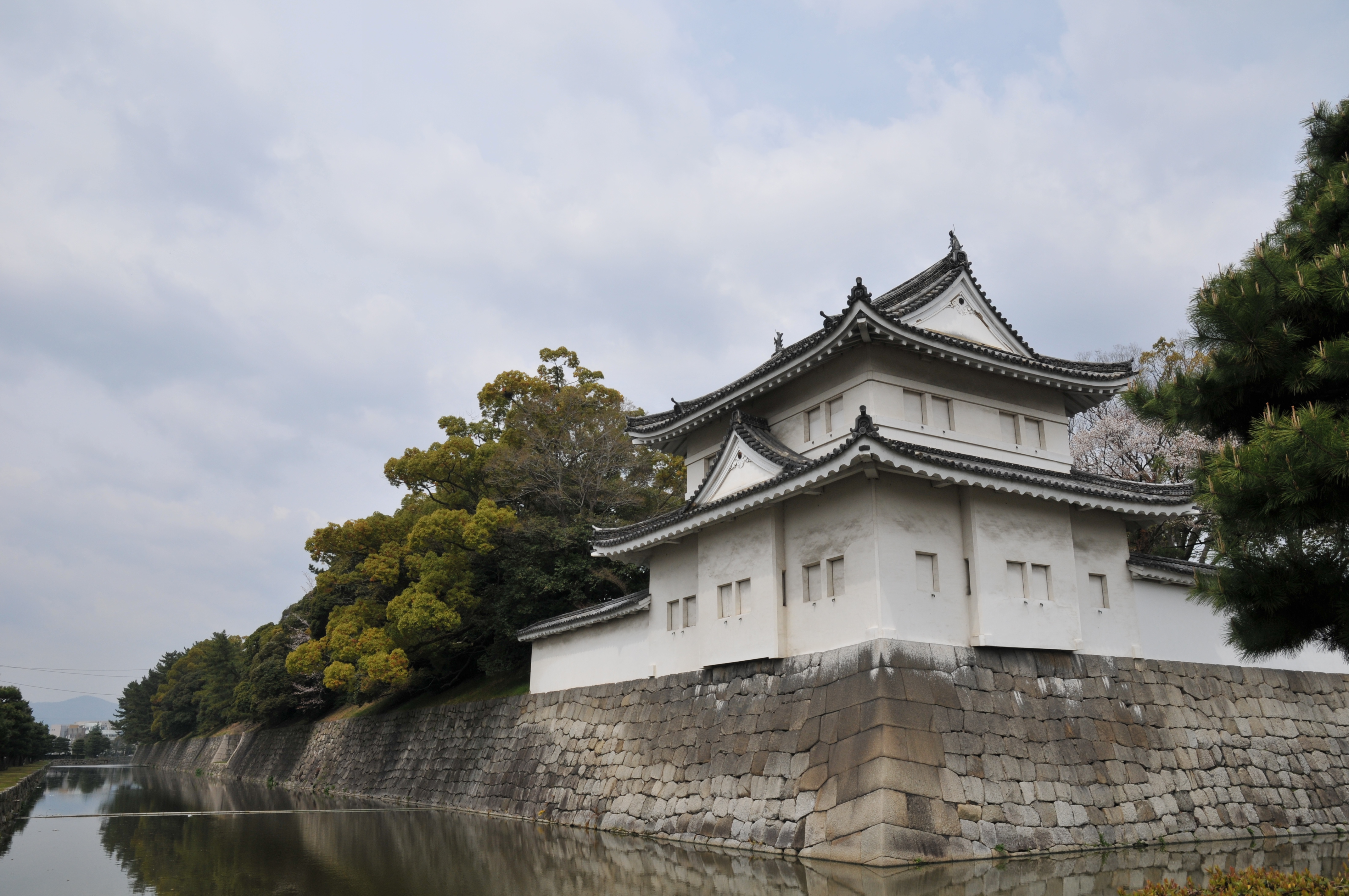
Nijo-jo Castle
Nijo-jo Castle
Temples & castles · Castle of the Tokugawa shogunate with the famous "nightingale" floors that creak when you walk; admission ~1.300 ¥.
1.300 ¥
Matcha experience in Uji
Gastronomy, Tradition · Half-day tour of Uji, the cradle of matcha, with a green-tea tasting and a visit to the surroundings of Byodo-in temple; from around 4.000 ¥.
2.500 - 4.999 JPY

Activities to book in Hiroshima

In Hiroshima and Miyajima, these activities help you organise the two days.

Baseball at the MAZDA Zoom-Zoom Stadium
Events, Sports · Watch a game of the Hiroshima Toyo Carp, the city's most beloved team; tickets from 1.700-4.500 ¥ depending on the seat.
1.500 - 2.499 JPY
Rabbit Island (Okunoshima): day trip
Animals, Nature · Trip to Okunoshima, the island inhabited by hundreds of free-roaming rabbits you can feed; tour from around 8.000 ¥.
5.000 - 10.000 JPY

Activities to book in Osaka

Osaka is the food stop of the trip, but it also has a castle, viewpoints and nearby day trips.

Osaka Castle (castle interior and museum)
Museums, Temples & castles · Visit the interior of Osaka Castle and its museum, with a viewpoint and an exhibition on the history of feudal Japan.
1.200 ¥

Indicative budget for 14 days

Estimate for one person in mid-season, with mid-range accommodation (a 3-star hotel or a quality hostel). In April and November prices rise by 30–40%. These are indicative figures, not a fixed budget.

Item14-day estimate
International return flight600–950 €
Accommodation (13 nights, ~60–90 €/night)780–1,170 €
Intercity transport (Shinkansen)250–430 €
Food (15–35 €/day)210–490 €
Tickets and activities120–200 €
Local transport (metro, bus)55–100 €
Total per person (without flight)1,415–2,390 €
Total per person (with flight)2,015–3,340 €

Be careful with the JR Pass: for this one-way route (Tokyo → Hakone → Kyoto → Hiroshima → Osaka, without returning to Tokyo) the long Shinkansen legs add up to around 33,000–35,000 ¥ bought individually, well below the 80,000 ¥ (about 435 €) the 14-day pass costs. Unless you add big detours (Kanazawa, Fukuoka or the north), the 14-day JR Pass usually is not worth it on this route. Check it with your exact itinerary in the JR Pass calculator, review the updated prices in the JR Pass guide and work out the cash to bring with the yen converter.

Make this itinerary your own

Fourteen days give plenty of scope to adjust the route without giving up the essentials. Some common variants:

  • Not interested in Hiroshima? Swap those two days for Kanazawa (Kenroku-en garden and historic districts) or for more time in Tokyo.
  • Want more nature? Replace an urban day with Takayama and the village of Shirakawa-go in the Japanese Alps.
  • Travelling with children? Reserve an Osaka day for Universal Studios and spread the Kyoto temples with more breaks. Ideas in Japan with kids.
  • Tight budget? Stay in Osaka the last nights and weigh up whether the 14-day JR Pass is worth it.

The fastest way to adapt it is to say how many days you have, how many of you there are, your budget and your pace: from there the nights are distributed between cities, the costs are estimated and the hotel links are generated automatically.

Generate your personalised 14-day itinerary Enter your dates, budget, number of people and travel pace. The planner distributes the nights between cities, estimates the costs and generates the hotel links.
Plan my trip →

More travel guides

Frequently asked questions

Is 14 days better than 10 to see Japan?

If you have the time, yes: with 14 days Hakone (Mount Fuji) and Hiroshima with Miyajima fit without sacrificing the essentials, and you gain a fourth day in Kyoto. With 10 days you see the fundamentals, but you miss those two extensions; compare it in the 10-day itinerary.

Is the JR Pass worth it for 14 days?

For this one-way route (Tokyo, Hakone, Kyoto, Hiroshima and Osaka, without returning to Tokyo), usually not. The long Shinkansen legs add up to around 33,000 to 35,000 ¥ bought individually, well below the 80,000 ¥ (about 435 €) of the 14-day pass. It is only worth it if you add big detours such as Kanazawa, Fukuoka or the north. Check it with your exact route in the JR Pass calculator and see the updated prices in the JR Pass guide.

How do you get to Hakone and is it worth sleeping there?

Hakone is about 90 minutes from Tokyo on the Romancecar. Sleeping a night in a ryokan with an onsen is highly recommended: it lets you do the Lake Ashi loop without rushing and continue the next day to Kyoto on the Shinkansen from Odawara or Mishima.

Can I swap Hiroshima for another city?

Yes. If Hiroshima does not appeal to you, those two days fit well in Kanazawa (Kenroku-en garden and historic districts) or in Takayama and Shirakawa-go. You can also devote them to going deeper into Tokyo or Kyoto. The route is a base, not a rule.

How much money do you need for 14 days in Japan?

Budget between 1,415 and 2,390 € per person excluding the flight, depending on accommodation and pace. Bring 350–450 € in cash (many small places are cash only) and use the yen converter for the calculation in your currency.

Is it better to start in Tokyo or Osaka?

The most efficient option is to fly into one airport and out of the other (an "open jaw" ticket). The most common is to arrive in Tokyo and leave from Osaka (Kansai airport), which is the order of this itinerary and avoids repeating legs.

How do I manage luggage between five cities in two weeks?

Use the Japanese luggage forwarding service (takuhaibin, by Yamato or Sagawa): for 1,500–2,500 ¥ your suitcase travels from one hotel to another in 24 hours. It is especially useful on the Hakone day, when you can send the large suitcase straight from Tokyo to Kyoto and do the ryokan night with just a backpack. The hotel reception arranges it. Also see what to bring in the packing guide for Japan.

What is the best time of year for this route?

Spring (sakura, late March to early April) and autumn (momiji, November) are the most spectacular but also the most expensive and crowded. January and February offer low prices and fewer people. You have the detail in when to travel to Japan.