Torii gates of Fushimi Inari shrine at sunrise in Kyoto

Kyoto: the former imperial capital and the most traditional face of Japan

More than a thousand temples, 17 World Heritage Sites and an atmosphere unlike any other city in the country.

Kyoto at a glance

Kyoto was the imperial capital of Japan for more than a thousand years, and that historical weight is felt on every street. The city brings together geishas in Gion, the thousands of orange torii of Fushimi Inari, the Arashiyama bamboo grove and pavilions such as Kinkaku-ji (the Golden Pavilion) or Ryoan-ji, famous for its zen rock garden. It is well connected by bus and train, but on weekends in high season the best-known temples fill up very quickly: it pays to set off early and plan the order of your visits in advance.

Kyoto usually takes the central part of a trip, once you are over the jet lag and have more patience to visit temples at a relaxed pace. It is about 15 minutes from Osaka by shinkansen and 45 from Nara by direct train, so it is easy to combine with other cities without changing your base. The cherry blossom season (late March, early April) and the autumn momiji (November) are the most sought-after times: book accommodation several months ahead. If your route includes southern Japan, Hiroshima is two hours by shinkansen from Kyoto Station.

How many days should you spend in Kyoto? Calculate your budget and split your nights automatically.
Plan my trip →

Key Kyoto areas

These three areas hold the most sought-after spots and work well as a base for planning your days of sightseeing.

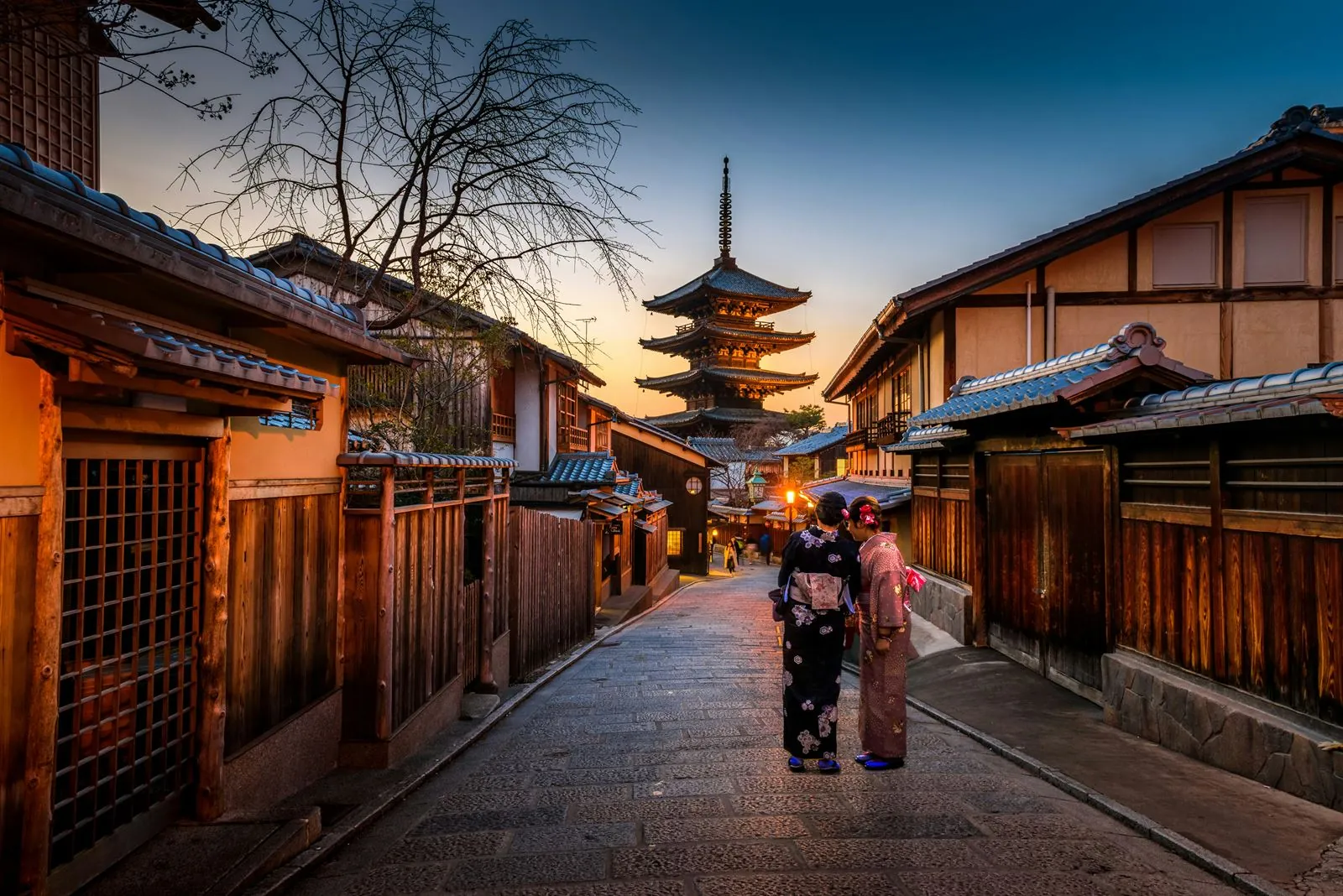
Historic cobbled streets of Gion and Higashiyama in Kyoto

Gion and Higashiyama

Gion is the geisha district (maiko and geiko) and one of the most photographed in Japan. Higashiyama spreads across a hillside full of temples and stone alleyways — Ninenzaka and Sannenzaka — where it is worth strolling at dusk, once most organised groups have left.
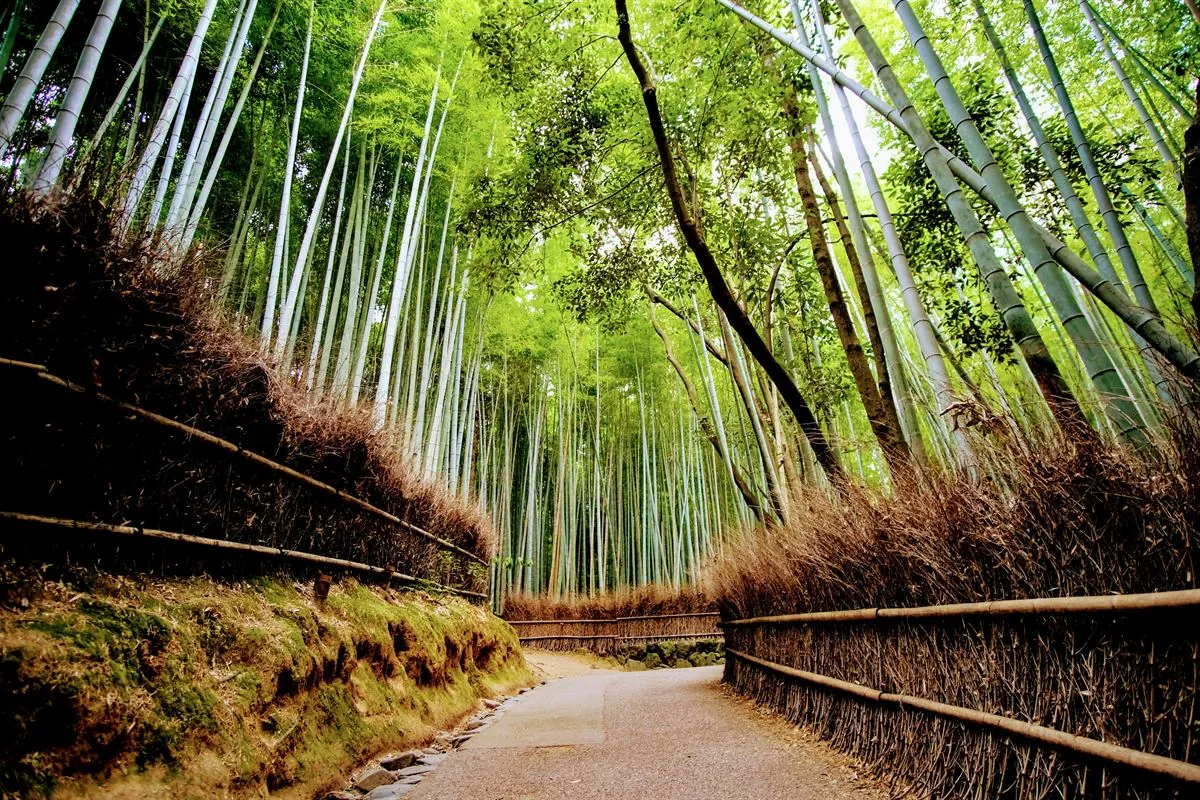
Arashiyama bamboo grove with visitors at sunrise

Arashiyama

A nature area to the west of the city, with the famous bamboo grove, Tenryu-ji temple (a World Heritage zen garden) and the Oi river, ideal for boat rides. Arriving before 8 in the morning makes the experience far more peaceful and photogenic.

Kyoto Station with the pagoda of To-ji temple in the background

The Station area

Kyoto Station is one of the most modern and striking buildings in the city and the hub for taking the shinkansen to Osaka, Hiroshima or Tokyo. To-ji temple, with the tallest five-storey pagoda in Japan, is less than 10 minutes on foot.

Activities and experiences in Kyoto

Recommended plans, sights and experiences, with budget guidance and direct links.

Tofu ryori in the Nanzen-ji area
Gastronomy · A vegetarian tofu-based lunch in a traditional restaurant next to Nanzen-ji temple; menu ~3.000-4.500 ¥.
2.500 - 4.999 JPY
Kodo incense ceremony
Tradition, Workshops · Guided session of the ancient Japanese incense ceremony in a traditional hall; plans from ~3.000 ¥.
2.500 - 4.999 JPY
Japanese wagashi sweets class
Gastronomy, Workshops · Learn to make wagashi (traditional sweets) with an instructor and taste them with matcha; class from around 3.000 ¥.
2.500 - 4.999 JPY
Nishijin weaving experience (ori)
Tradition, Workshops · Visit the Nishijin weaving workshop and try on a loom-woven kimono; from ~3.500 ¥ with dressing.
2.500 - 4.999 JPY
Zen meditation (zazen) at a Kyoto temple
Tradition, Workshops · A zazen session guided by a monk at a private Kyoto temple, with an explanation of breathing and posture; from around 3.500 ¥.
2.500 - 4.999 JPY

How to fit Kyoto into your itinerary

Kyoto usually takes the central part of a trip, once you are over the jet lag and have the patience to visit temples at a relaxed pace. It is 15 minutes from Osaka by shinkansen and 45 from Nara by direct train, so it is easy to combine without changing your base — many travellers hesitate between staying in Kyoto or Osaka. If your route continues west, Hiroshima is two hours away by shinkansen. To see how many days to give it within the whole trip, check the itineraries by duration.

Travel between cities

How much does the train to Kyoto cost? Check whether the JR Pass is worth it by adding Kyoto to your route.
Calculate JR Pass →

Frequently asked questions about Kyoto

How many days do I need to see Kyoto?

Between 3 and 5 days lets you visit Gion, Arashiyama, Fushimi Inari and the best-known temples without rushing. With fewer than 3 days you will have to choose your priorities very carefully. See the full guide →

Is it better to stay in Kyoto or travel from Osaka?

Staying in Kyoto lets you make the most of the quietest hours at the temples — very early or at dusk — and enjoy the atmosphere of Gion at night. Travelling from Osaka is also viable and can work out cheaper: it is about 15 minutes by shinkansen. See the full guide →

What is the best time to visit Kyoto?

Spring (late March to early April) for the cherry blossoms and autumn (November) for the momiji colours are the most prized seasons, though also the busiest. Summer is hot and humid, but the Gion Matsuri festival in July is one of the most famous in Japan. Winter has fewer tourists and the snow-covered temples are spectacular. See the full guide →

What is Fushimi Inari and how much time do I need?

Fushimi Inari is a shrine with thousands of orange torii that climb a mountain of about 230 metres. The full climb takes between 2 and 3 hours. If you only want to see the most famous torii, the lower section takes 30-40 minutes. It is worth arriving before 8 in the morning to avoid the crowds. See the full guide →

Can you see geishas in Gion?

The maiko and geiko (Kyoto geishas) work in the district's ochaya (tea houses). You can see them walking through the streets of Gion — especially Hanamikoji — at dusk. Avoid chasing or photographing them up close without permission: it is an increasingly regulated practice and disrespectful. See the full guide →

How do you get to Nara from Kyoto?

The JR Nara Line from Kyoto Station (covered by the JR Pass) takes about 45 minutes. The Kintetsu is a little faster (35 min) but is not included in the JR Pass. See the full guide →